Giving Poverty a Voice
  • Blog
  • Mailing List
  • Contact
  • RELATED LINKS

giving poverty a voice

​Welcome to the ​ATD Fourth World - UK blog! This blog was created to give people living in poverty a chance to speak out about their experiences, challenges, aspirations and ideas.
If you are also interested in writing about poverty and the impact it has on all of us, please submit your post by sending an email to [email protected]. 
*ATD Fourth World UK reserves the right to analyse the content and wheth
er to publish the article.

Submit

I am a person not a case study

2/3/2017

0 Comments

 
Picture
The following is a presentation given by Andrew, a father whose family have been the subject of social service interventions and child protection plans, at the Reinforcing or Reducing Inequality among Children? The Role of Child Protection Services conference at King's College London on 28 February 2017. #cwipconf17

Andrew : The Roles of Child Protection Services
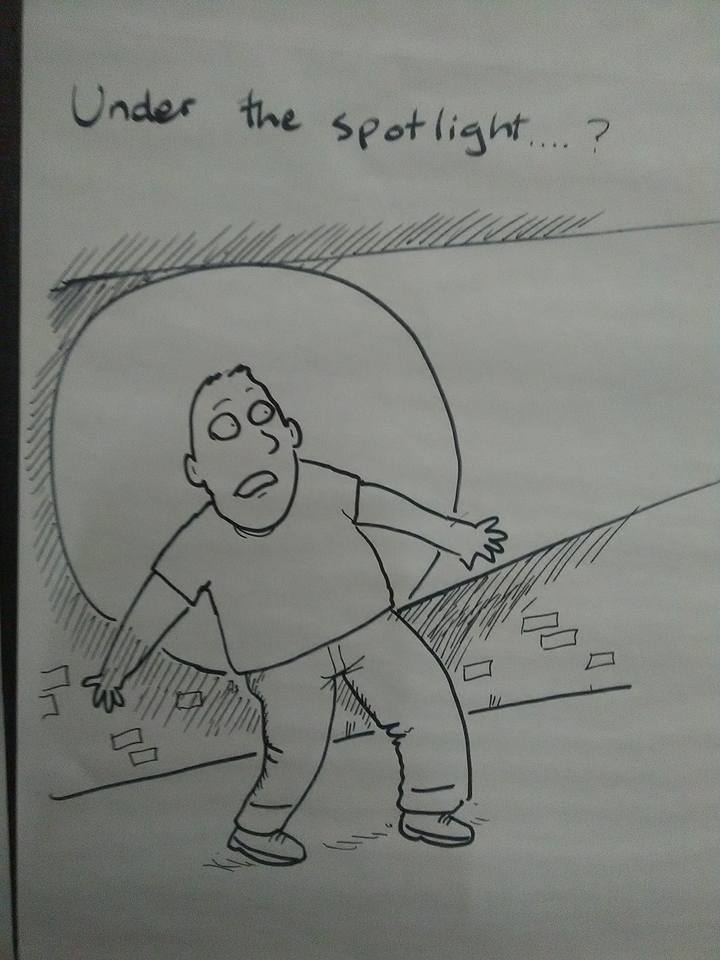
When I was asked to speak to you all today, I was told that other people would talk about facts and figures and statistics. I can tell you what these statistics mean in real life. I can tell you about my own experience.  When social services are involved in your life, you are in the spotlight. It is like living under a microscope. You feel like you have to agree with everything the social workers say. If you don't agree with them you know that you will lose your kid. It feels like having a gun to your head.
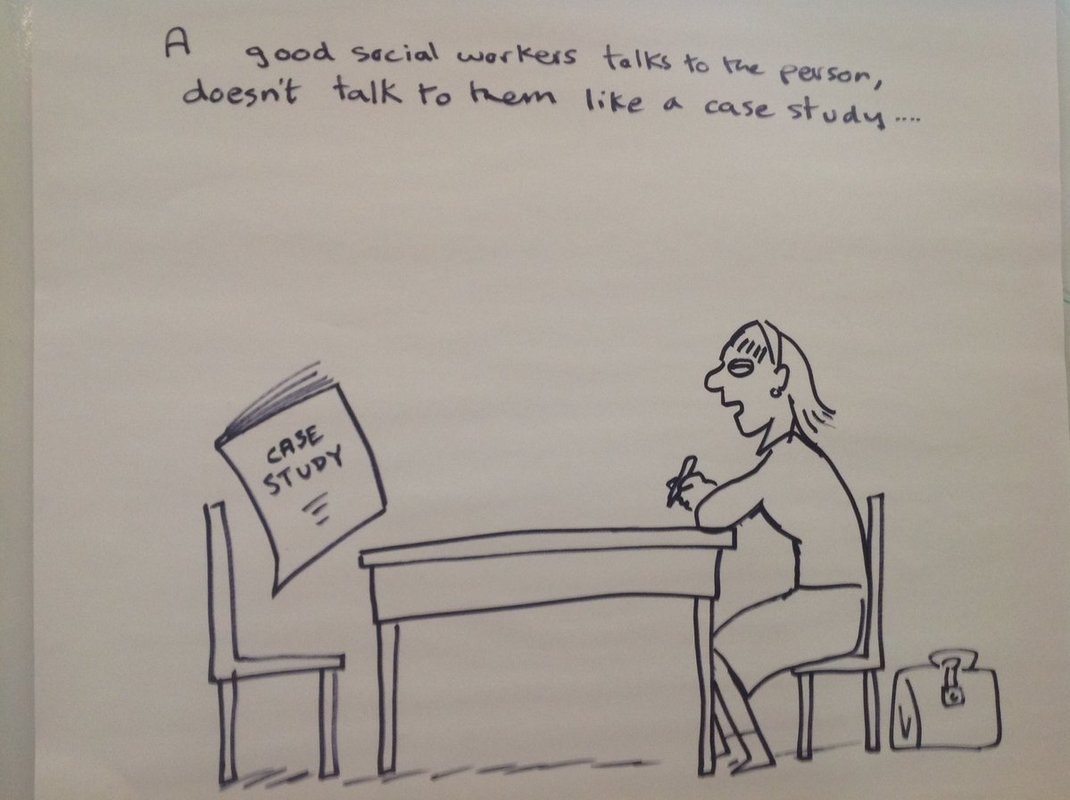
I've had bad experiences with social workers and good experiences. A good social worker will talk to you; it is about you and your family, not about your case file or statistics. I am fortunate to have had good social workers this time around; one, they have tried to see things from my point of view and see what life is like in my shoes and, two, they have gone back to their managers and fought my case for me.
My wife fell pregnant two years ago. We were told by our social worker and her manager that they wanted to make sure we were meeting our baby's needs and that she was developing like a new born baby should. 
When social services are involved in your life, you need them to be understanding. I know they are focusing on my daughter's weight. But I didn't go and get her weighed last week because I was sick and my wife was out at college. There was nobody take her. You need social workers who understand that and don't jump down your throat when you have a good reason for not doing what you said you would.
In the past, with our older children, I feel like there was never a fixation on a baby's weight like there is now. My daughter is now messing with her food and messing about at mealtimes. It puts pressure on me and my wife to feed her and to persevere. Despite all this, she is still within the centile but this pressure is new.
When she was born, we were sent to an assessment centre for three months. It was worse than being in prison. We were the eldest people there, surrounded by immature children having children.
But we agreed to go because we know that if social services have concerns, you have to work with them to get rid of them! If they want you to do something then you have to do it.
Going there also proved to the social worker that we were determined to keep our baby, even if it meant taking advice from staff who didn't even have kids of their own. You have to show willing.
When we came out of the assessment centre, social services made me the main carer for our child. They asked me not to work or look for work. It doesn't work that way when it comes to the JobcentrePlus; if you're not allowed to look for work then you get no benefits.
Social services cannot have it both ways. I cannot be asked to be the main carer and only stay at home with the baby. I need to go out and work to earn money. Nothing in this world is free. You can't feed a child on fresh air. And if you can't provide for your child then social services will take your child away.
In the end, social services realised I needed to be able to work part-time to get benefits. My work advisor was a really good support for me. But the real difficulty is that not working means you have no money. And if you have no money then you can't provide for your child.
I have more outgoings than income because being on benefits is no good. Everybody wants the best for their kids and themselves but that doesn't mean just feeding them; it means keeping a roof over their head, clothing them. A life on benefits means I can't go on holiday. It means having that not nice feeling in your stomach when your teenage son asks for a laptop or trainers at Christmas and you're not sure you have enough money for the rent, the gas, the electricity and the food.
A child does not come with a bottomless pit of money so I need the freedom to go out and work. I still want a normal life for me and the kids.
Dignity means respect. Living on handouts, which is what being on benefits means to me, means no dignity.
In the end, I want to repeat what I said at the start. I've had bad experiences with social workers and good experiences. A good social worker will talk to you; it is about you and your family, not about your case file or statistics.
It is also important to have a good support network. I am lucky to have family, friends and ATD Fourth World. This made a difference because having them there meant I could fight to go back to work and know they would visit my wife to support her with our children.
You need to know what support my family has needed outside of social services: holidays with ATD, someone to come to court with us, someone to come to case conferences and meetings with social services, someone to visit us when we were in the family assessment unit, someone to support my wife her confidence and get her out of the house when she was having her panic attacks, someone to support our son through the loss of his brothers and take him out places so that when he feels he can't talk to us he has someone to talk to.
Everyone needs support with kids. With kids, you go through good and bad but it feels like social services are only there for the bad. If social services really want to work with families then they cannot just walk away from a family the moment the child is adopted. If you want to work with families then it is the relationship that has to be the most important thing.
Thank you.                                         
By Andrew ATD Fourth World

For more info about our Social Work Training Programme :
https://www.atd-uk.org/projects-campaigns/policy-participation-and-training/social-worker-training-programme/

Cartoon imagines from the conference by  @harrymvenning


Picture
0 Comments

Angela Addresses Women Leaders

20/2/2017

1 Comment

 
Picture
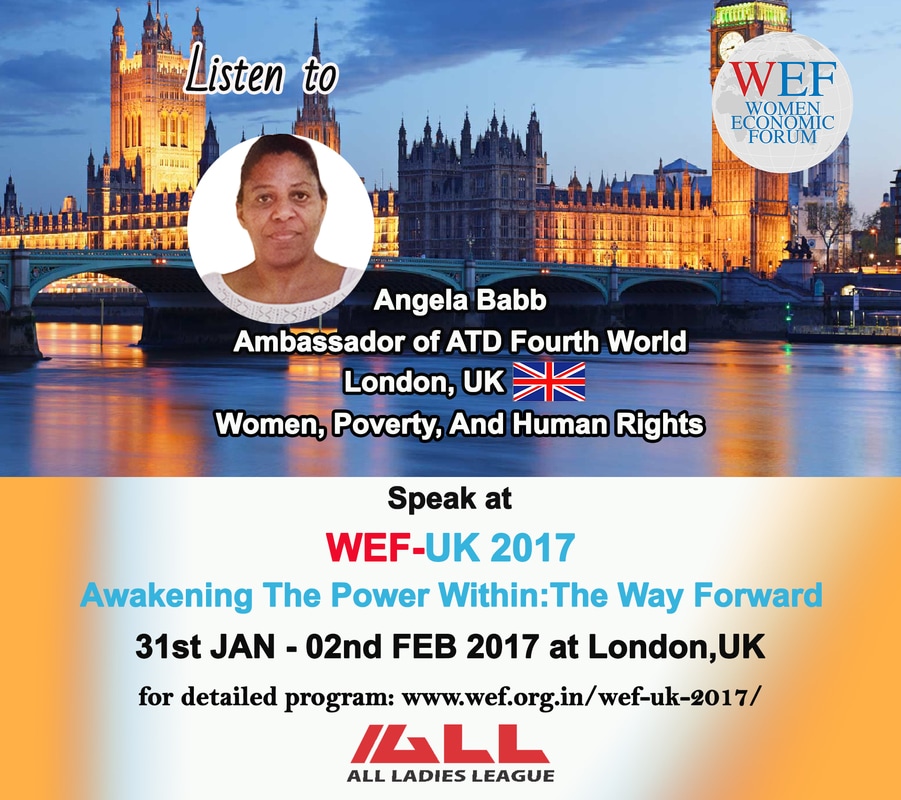
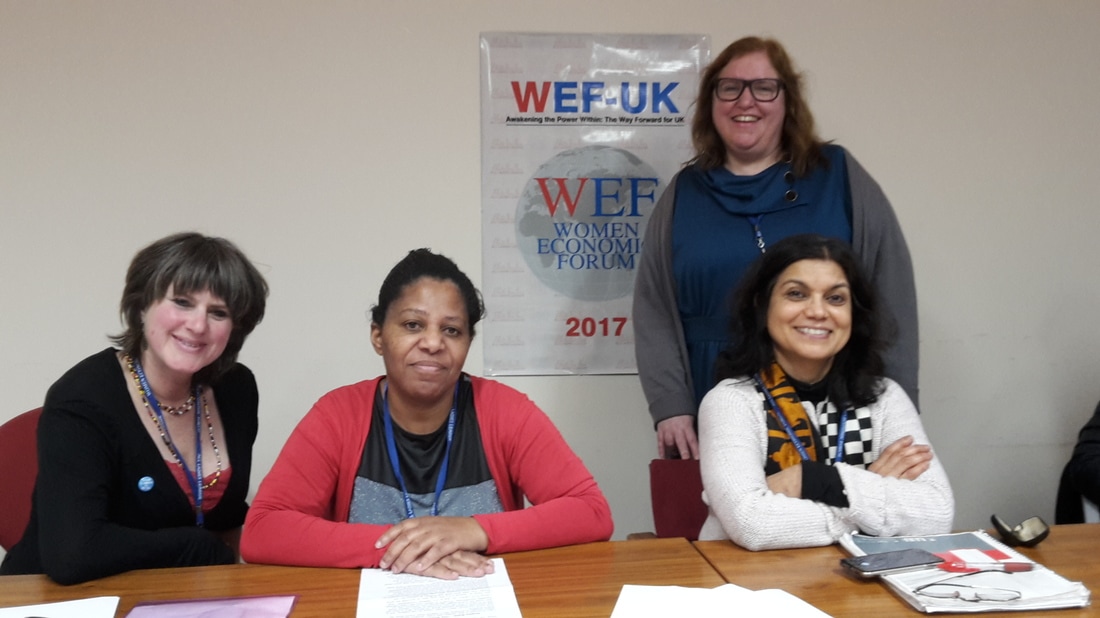
On the 1st February 2017, ATD Fourth World members Angela Babb and Diana Skelton were invited to speak at the Women Economic Forum in London. This conference brought together 250 women from Britain, and twenty other countries in Europe, the Middle East, and South Asia. The forum's goal is to enable women to expand their opportunities and increase their global influence through networking, collaborating, and inspiring one another. Angela and Diana's talk was part of a panel entitled, "Women, Poverty, and Human Rights". It included presentations by Carrie Supple, director of Journey to Justice, Dr. Meera Tiwari of the University of East London, and Santosh Dass, Vice Chair of the Anti-Caste Discrimination Alliance. Angela's talk, below, focused on why she got involved in the Roles We Play: Recognising the Contributions of People in Poverty (www.therolesweplay.co.uk) , and on what it means to live in poverty in Britain today

Angela Babb: “The Roles Women Play”
I got involved in the “Roles We Play” project because so many people in poverty don't realise how much they do that's positive.

The word “poverty” didn't mean much to me before. It's a big word that makes people think of Africa. But in fact we are in poverty here in Britain too. Poverty is when others think you must be a scrounger because you need to rely on benefits sometimes. Poverty is when you get stigmatised. Using food banks can leave you feeling humiliated—but you have no choice if a food bank is the only way to provide for your family. You see your kids get bullied at school for not having the right trainers. You can have your door kicked in by bullies. And if that happens on a Friday, the council won't send anyone to fix it until Monday. So what do you do with your children for the weekend? It's not safe to sleep at home, but if you take them somewhere else, you're leaving your flat unlocked, and you might not find anything left. Being bullied can make a child completely distraught and afraid to go outside or even afraid to sleep—but even teachers refuse to recognise it and they don't give the child any support.
Health professionals are no better. You can see your child struggling year after year, but not actually receive a diagnosis of autism until the age of 17.
And if you are struggling to help your children, sometimes the only response from social services is to remove the children from your custody. When that happens, it might be many years before you can see your own children again, and before they're allowed to see their brothers and sisters. By then, there's been so much strain and stress that you have to get to know them all over again.
When your children get older, you see them trying to get a job—but they get their confidence knocked right off. Racism hurts too. Once on a crowded bus, a gentleman shouted at me, my baby, and my 27-year-old daughter: “There shouldn't be no chocolate people on the bus!” The gentleman didn't stop there: he gave my daughter a full-blown punch in the mouth. I was gobsmacked. I asked the bus driver to call the police. But not a single other passenger would speak up to the police about what they saw.
We mums have to be strong for our kids. My mum worked in a school as a dinner lady and also worked in the city cleaning office buildings. We always focus on our kids; we put ourselves last. If we're not strong for them, how can they count on us?
It is important to have a voice. Everybody has a right to be heard. But sometimes, you try to express yourself clearly, but the right words just won't come out. To have a voice, you need to have the opportunity to meet other people who respect you. The “Roles We Play” project gives people a voice and the chance to share the different stories that they have. The project tells people that each life tells a different story; we’re people, we’re not just a number.
For more info about the Journey to Justice http://journeytojustice.org.uk

Picture
1 Comment

The impact of austerity on children's social care and practice

1/2/2017

0 Comments

 
Families in poverty have taken the brunt of austerity measures since the global economic crisis began, resulting in growing social and economic inequality. In Britain stringent cuts in welfare and public services have led to significant hardship for vulnerable children and families. The Child Poverty Action Group estimates that there were 3.9 million children living in poverty in the UK in 2014-15, 28 per cent of children, or 9 in a classroom of 30. The number of children in absolute poverty has increased by 0.5 million since 2010 (www.cpag.org.uk). Some families are at far greater risk, for example large families have been particularly adversely affected by the lowering of the cap on benefits (www.ifs.org.uk). Over recent years there has been a rapid growth in foodbanks with an estimated rise of 54% between 2012/2013 and 2013/2014 (Perry et al., 2014). The number of homeless families living in temporary accommodation also has risen, with a rise of more than 300% since 2014 in the number of families housed illegally (for more than the statutory maximum of six weeks)(Helm, 2017).
Pelton (2015) argues that poverty is the predominant context in which harm and endangerment to children thrive, and is multifaceted, involving direct and indirect relationships. Poverty undoubtedly makes parenting harder, and impacts differentially on individual families, with particularly serious consequences for more vulnerable individuals and those without formal or informal sources of support (Hooper et al., 2007). Yet at the same time that many families are suffering increased hardship, severe reductions in local authority budgets are leading to significant cuts in family support services, such as children’s centres and youth services (Sammons et al., 2015).
Alongside the decrease in family support provision to address need, there has been an intensification of identifying risk. The national statistics show that child protection investigations increased by 79.4 % between 2009–10 and 2014–15 (DfE, 2015). Whilst there was an increase in children placed on a child protection plan (40.4 %) over this period, the much larger increase in investigations meant that the number of children who came under suspicion and were investigated but were not found to be significantly harmed more than doubled from 45,000 to 98,000 (DfE, 2015). Devine and Parker‘s (2015) analysis of referral and assessment trends similarly found practices that were preoccupied with detecting abuse, ignored need and frequently left families alienated and frightened. In addition new applications to the family courts to remove children from the parents’ care have also court continued to rise over the past few years, with 12,758 applications between April 2015 and March 2016, which represented a 14% increase from the previous year (CAFCASS, 2016).
Although no official statistics are collected on the socio-economic background of children and families involved in the child protection system, it is highly likely that increase in care proceedings are primarily affecting children from poor backgrounds. A study by Bywaters (2015) provides recent evidence of a clear link between deprivation and a child’s life chances in relation to their ability to live with their family of origin. Similarly Hood et al. (2016) found that the overall system has become increasingly geared towards protective rather than supportive interventions, with deprivation levels continuing to be the key driver of referrals.
Whilst most families in poverty do not maltreat their children, a review of the literature has reinforced the significance of poverty as a contributory causal factor in child abuse and neglect (Bywaters et al 2016). Poverty is most closely associated with neglect, the highest category for child protection plans, and acts both directly through the capacity of parents to maintain the basic conditions for healthy child development, such as food, shelter and warmth, or to buy a variety of forms of support, and indirectly through the stresses created by low income. Poverty is not just incidental but woven into the fabric of people’s every day lives; an influential factor in family relationships on a day-by-day, hour by hour basis, in its own right and interacting with other forces such as parental mental health, substance use and domestic violence (Bywaters et al 2016), and compounded by increasing levels of inequality in society (Wilkinson & Pickett, 2009).
Despite evidence linking material deprivation and parenting difficulties, Conservative Government ministers and policy advisors have strongly repudiated the view that social injustice and inequality are factors that need to be considered when trying to understand and deal with the harms that children and their families experience (Featherstone, 2016). The neoliberal individualizing of blame and the ‘othering’ of people in poverty is the dominant policy discourse (Warner, 2015), as clearly exemplified by the statement by the then Secretary for Education, Michael Gove (2012) when he spoke about needing to rescue children from ‘a life of soiled nappies and scummy baths, chaos and hunger, hopelessness and despair’. Social work educators have been criticized for focusing too much on poverty and inequality and teaching students to excuse parents in poverty for their ‘bad choices’ (Narey, 2014).
High caseloads and frequent staff turnover, scarce support services, and an increasingly narrow, time-limited and risk averse focus characterise much of children’s social work in local authorities. Recently, Dave Hill, President of the ADCS, warned that because of the funding crisis the system was approaching a “tipping point” and the effects of six years of austerity on services could not be understated (Stevenson, 2016).
This context makes it much harder for social workers, despite their best intentions, to reconcile practices with the primary values of the profession: the promotion of human rights and social justice.  Developing effective relationships with families is made more difficult for both practitioners and service users. There is much research on how alienated families become by systems that convert their need for help into evidence of risk (Featherstone et al., 2016).
Poverty is undoubtedly about material disadvantage, but it must also be understood in terms of relational and symbolic injustices in a deeply unequal society. Lister (2013, p.112) refers to poverty as:
a shameful social relation, corrosive of human dignity and flourishing, which is experienced in interactions with the wider society and in the way people in poverty are talked about and treated by politicians, officials, professional, the media, and sometimes academics.
Families living in poverty have spoken about how poverty-related shame and stigma is compounded by a child protection system that is inherently shaming (Gibson, 2015) and unjustly blaming by failing to address poverty and other social adversities that frame their lives (Gupta & ATD Fourth World, 2015).
Feelings of powerlessness and voicelessness characterises many families’ experiences of child protection processes and were linked to subsequent feelings of shameful inadequacy, as a parent explains about her experiences of a child protection conference:
So you are sat there observing what everyone else is doing with your life, and your children’s life (who potentially have no rights) on the basis of strangers around the table. It is degrading, humiliating. Everything is taken away from you”. (Gupta and ATD Fourth World, 2015: 137)
The shift in local authority social work services from support to policing in a highly risk averse context fosters fear and distrust in many families. As a result, families in need feel they have “nowhere to turn to” and are too scared to approach children’s social care services for fear of punitive responses (Morris et al., 2015; Gupta et al., 2016).
Service users have also described being judged without reference to the socio-economic contexts of their lives and viewed as if they were entirely responsible for their problems. Without an adequate understanding of the reality of poverty, the assessments made about the family or quality of parenting may be subjective and inflected by middle class presumptions or prejudice. A key message that comes from service user perspectives as well as academic research is that poverty matters, and attention to the effects in relation to families’ lives, as well as social workers’ judgements and interventions is necessary, as one ATD Fourth World activist explains:
“I am supporting a couple of families where, being aware of social work practice, it’s clear that there is material deprivation, but there’s also severe depression from the mother and that is raising questions over whether she can look after the children. So it’s not clear cut what the issues are at play there. If the child is taken away, no one will say because of material deprivation, but that the mother can’t cope because of mental health. But it’s not that simple, there are many factors building up and material deprivation can play a huge role. Parents are judged because of the way they are suffering for things sparked by material deprivation”.
 
Mason and Bywaters (2016) have concluded, poverty and allegations of neglect are so interlinked that prioritising context-blind, policing-type investigations over supportive measures to address poverty, will likely prove both ineffective and financially inefficient.  What is required is a reversal of austerity policies that are so damaging to the lives of families stuggling in contexts of poverty and rising inequalities, and a fundamental shift in children’s social care provision away from investigation and risk assessment towards early help and family support, whilst still recognizing that some children will require protective action from local authority.  However, it is also essential that individual practitioners critically reflect on their use of power, on the influence of dominant discourses on how families’ problems are framed, and on the subsequent judgements made. Finally, coming together and building alliances is recommended in order to truly promote the best interests of our society’s most vulnerable children, as one ATD Fourth World family member explains:
“When families and social workers can work collaboratively in the best interests of the children, it builds a better knowledge base for both parties and the outcomes are likely to be better for the children. As you work together, you learn from each other.”

 Anna Gupta & ATD Fourth World
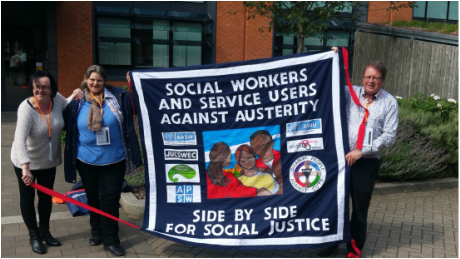
Written for the Social workers and service users against austerity campaign

References:
Bywaters, P. (2015) ‘Inequalities in Child Welfare: Towards a New Policy, Research and Action Agenda’, British Journal of Social Work, 45 (1), pp. 6-23.
 
Bywaters, P., Bunting, L., Davidson, G., Hanratty, J., Mason, W. J., McCartan, C., & Steils, N. (2016). The relationship between poverty, child abuse and neglect: a rapid evidence review. York, Joseph Rowntree Foundation Downloaded from https://www.jrf.org.uk/file/48920/download?token=Pmnooju4&filetype=full-report
 
CAFCASS (2016) CAFCASS Care Demand Statistics : July 2015, Available at
https://www.cafcass.gov.uk/leaflets-resources/organisational-material/care-and-private-law-demand-statistics/care-demand-statistics.aspx
 
Department for Education (DfE) (2015) Characteristics of children in need: 2014 to 2015, London, DfE. Available at: https://www.gov.uk/government/uploads/system/uploads/attachment_data/file/469737/SFR41-2015_Text.pdf.
 
Devine, L & Parker, S. (2015) Rethinking child protection strategy: Learning from trends, Working Paper, Bristol: Centre for Legal Research, University of the West of England
 
Featherstone, B. (2016) ‘Telling different stories about poverty, inequality,
child abuse and neglect’, Families Relationships and Societies, 5 (1), 147-153
 
Featherstone, B., Gupta, A., Morris, K. & Warner, J. (2016) ‘Let’s stop feeding the risk monster: towards a social model of child protection,’ Families, Relationships and Societies, early on-line publication – first published 15th February 2016
 
Gibson, M.  (2015) ‘Shame and guilt in child protection social work: new interpretations and opportunities for practice’, Child & Family Social Work, Child and Family Social Work, 20(3), pp. 333–343
 
Gove, M. (2012) ‘The failure of child protection and the need for a fresh start’, Education Secretary speech on child protection on 19 November at the Institute of Public Policy Research. Available online at www.gov.uk/government/speeches/the-failure-of-childprotection-
and-the-need-for-a-fresh-start
 
Gupta, A. & ATD Fourth World (2015) ‘Poverty and Shame – Messages for Social Work’, Critical and Radical Social Work, , 3 (1), pp. 131-139
 
Gupta, A., Blumhardt, H. and ATD Fourth World (2016) ‘Giving Poverty a Voice: Families' experiences of social work practice in a risk-averse system’, Families, Relationships and Societies, 5 (1), pp. 163-172
 
Helm, T, (2016) ‘Shocking’ rise in number of homeless children in B&Bs at Christmas’, The Guardian 17th December 2016. Available at:
https://www.theguardian.com/society/2016/dec/17/homeless-children-christmas-shocking-rise
 
Hood, R. Goldacre, A. Grant, R. and Jones, R. (2016) ‘Exploring demand and provision in English Child Protection Services’, British Journal of Social Work, Early online publication: May, 13th, 2016   
 
Hooper, C., Gorin, S., Cabral, C. and Dyson, C. (2007) Living with hardship 24/7: The diverse experiences of families in poverty in England, London: Frank Buttle Trust
 
Lister, R.  (2013) ‘Power, not Pity: Poverty and Human Rights’, Ethics and Social Welfare, 7, 2, pp. 109-123
 
Mason, W. and Bywaters, P. (2016) ‘Poverty, child abuse and neglect: patterns of cost and spending’, Families, Relationships and Societies, 5(1), pp. 155-161.
 
Morris, K., White, S., Doherty, P. and Warwick, L. (2015) ‘Out of time: theorizing family in social work practice’, Child and Family Social Work, early online publication: 7 October 2015
 
Narey, M. (2014) Making the education of social workers consistently effective: Report of Sir Martin Narey’s independent review of the education of children’s social workers. Available at: https://www.gov.uk/government/uploads/system/uploads/attachment_data/file/287756/Making_the_education_of_social_workers_consistently_effective.pdf
 
Pelton, L. (2015) ‘The continuing role of material factors in child maltreatment and placement’, Child Abuse & Neglect, 41: 30 – 39.
 
Perry, J, Williams, M, Sefton, T and Haddad, M. (2014) Emergency use only: Understanding and reducing the use of food banks in the UK, London: Child Poverty Action Group,Church of England, Oxfam GB and The Trussell Trust
 
Sammons, P., Hall, J., Smees, R. and Goff, J. with Sylva, K., Smith, T., Evangelou, M., Eisenstadt, N. and Smith, G. (2016) The impact of children’s centres: studying the effects of children's centres in promoting better outcomes for young children and their families, Oxford: University of Oxford
 
Stevenson, L. (2016) ‘Unstable’ funding for children’s social care hitting services’, Community Care, 7th December 2016. Available at:
http://www.communitycare.co.uk/2016/12/07/unstable-funding-childrens-social-care-hitting-services/
 
Warner, J. (2015) The Emotional Politics of Social Work and Child Protection, University of Bristol: Policy Press.
 
Wilkinson, R, Pickett, K. (2009) The Spirit Level: Why more equal societies almost always do better, London: Allen Lane.

0 Comments

Creating dialogue

26/1/2017

0 Comments

 
Picture
In this blog post I would like to share with you two examples of what poverty is and what living in poverty can feel like and I also wanted to share an example of why it is so important to stand up and speak out about poverty.
 
Poverty is …
Standing at the school gates waiting for my child to finish for the day
Trying to fade into the background noticing the glances nearing the nasty comments, praying the bell will go so we can get away.
Knowing in my mind I'm not what people say, I'm just unlucky the jobs don't have the pay that is needed to take my debts away.
The pay you see will only go so far when all you earn is minimum wage.
Once you've paid your rent, council tax and utility, if you're lucky there is a week of meals. If not you have to go see an official and tell them why you need their help and then its 50 questions just like the other month; and if you're lucky you will be allowed to use the food bank to give your kids a meal.
So you hold your head in shame hoping no one will see you walk in the food bank once again and all because of that unexpected bill because the washing machine went wrong or shoes wore out again.
 
On a cold and wintry morning I pull back my frozen blanket, a sleeping feeling comes into my legs. I have to get up quickly before the pavement becomes to busy or I will get kicked away for being in the way.
Even though they only walk on it people think it is their pavement but for me it is where I have to sleep.
 
 
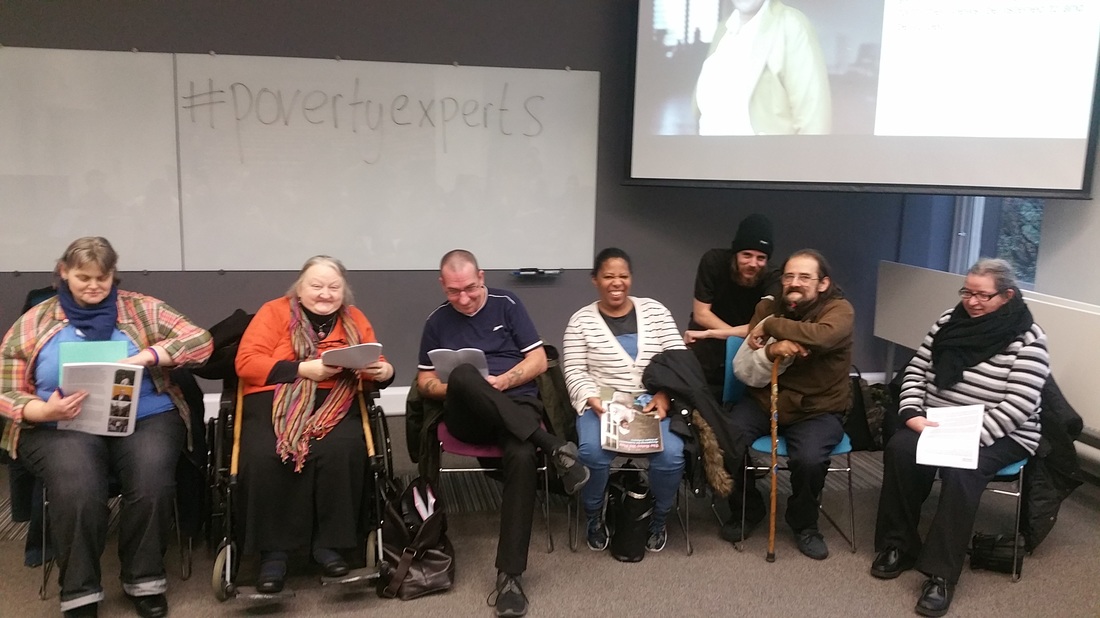
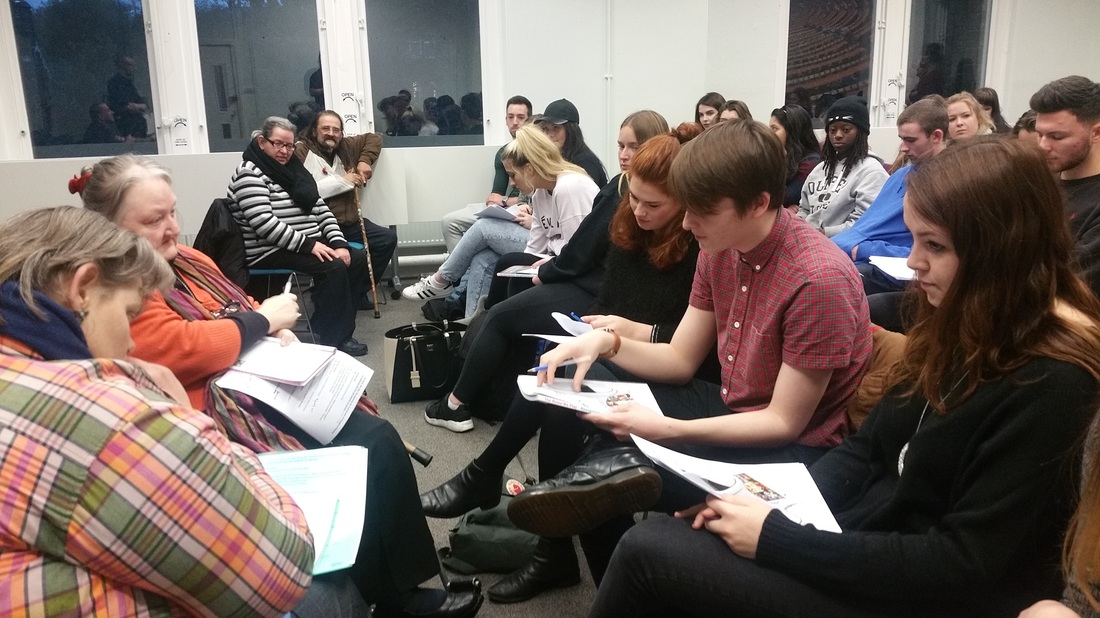
ATD Fourth World has giving me the opportunity to represent the organisation at a number of different events. Recently we presented The Roles We Play: Recognising the Contribution of People in Poverty (www.therolesweplay.co.uk) at The University of Sheffield. I was part of a Poverty Experts panel together with 6 other family members from ATD Fourth World.
We presented our work based on real life experience of poverty to around 60 students in a lecture room setting. It was important that we spoke directly to the students; it felt to me like a real achievement as we were given the chance to interact with students who in later life might end up being the policy makers.
If we can teach the students now that people in poverty are not just facts and figures on a report, but everyday people, then as they go through life they see people not just as numbers interacting with them.
I also learned from the students as some of them had been brought up in poverty and they told me about how they had felt about seeing their parents struggle to make ends meet.
During the session we asked the audience what poverty meant to them? I remember now their answers were very different to the answers we got when we asked academics, as some gave explanations of how poverty had affected them or a friend. Not the sort of response we are used to from older people who quite often give responses not unlike what you read in the press.
It is nice to know that the younger generation has not yet been corrupted by the press and politicians.

Thomas ATD Fourth World
Picture
0 Comments

Measuring poverty in all its forms

30/11/2016

0 Comments

 
Picture
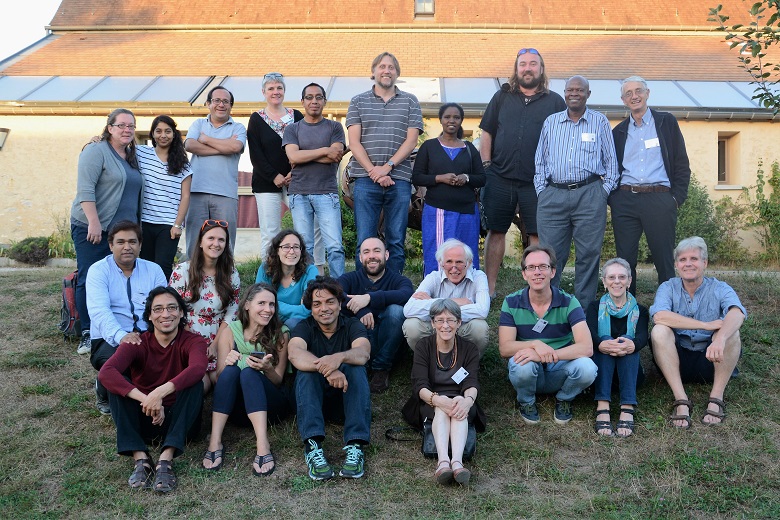
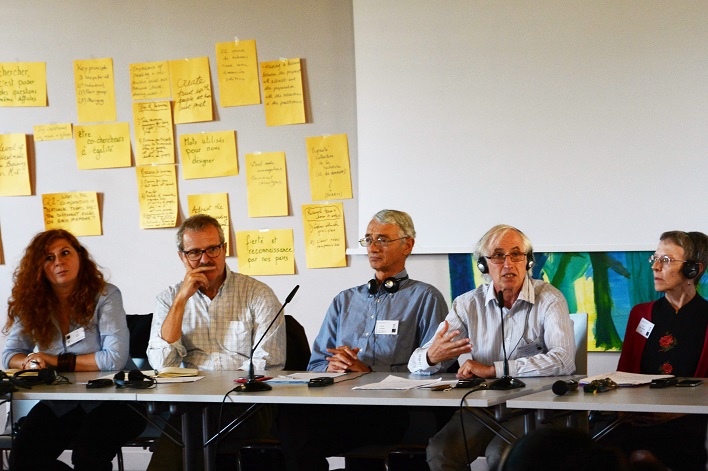
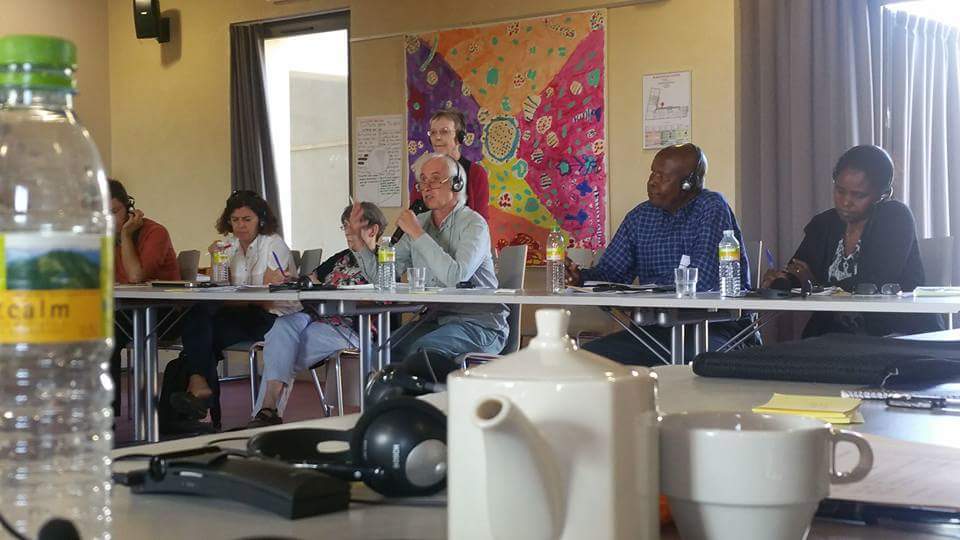
In early September, on an organic farm in rural France, an international group of poverty experts met to talk about researching a new way to understand poverty around the world. There were the usual plenary sessions, small group breakouts, and murmuring from simultaneous interpretation booths at the back of the room.

The meeting was a planning session for an ambitious three-year project that will attempt something that has not been done before on such a scale. From start to finish, the project includes as equal partners people living in poverty.

“Determining the Dimensions of Poverty and How to Measure Them” is a project that will take place in seven countries. Each country will identify “dimensions”, or characteristic elements, of poverty. These new dimensions will help policy-makers aim at the right problems, design more effective programs, and figure out if they are making a difference. The study will help the United Nations reach its goal of “eliminating all forms of poverty by 2030”.

The project (funded by ATD Fourth World, the French Development Agency, Oxford University, the Charles Leopold Mayer Foundation for Human Progress, and several other organizations) is led by ATD Fourth World in collaboration with Robert Walker, an Oxford professor of social policy. The project will take place over three years in four pilot countries: Bangladesh, France, Tanzania and the United Kingdom. Similar research will take place on a smaller scale in Bolivia, the Ukraine, and the United States. Attending the meeting were teams from each participating country and the Academic Advisory Board that directs the research.

The project grew out of the increasing awareness that, in order to be successful, poverty policies need to do more than ensure that all people across the world have access to electricity, health care, food, and enough money to meet their basic needs. More and more, policy makers have realized that addressing poverty – especially extreme poverty – requires taking into account complicated cultural and personal elements, both when designing programs and measuring success. At times, well-intended services and programs to address poverty cause unintended harm.

Experts are coming to see that the best way to design solutions is to talk with and listen to the people these programs want to help.

The planning meeting in France focused on how to make conversations happen among very different groups of people who don’t usually talk to one another. A team from each country brought ideas about how to create meaningful long-term exchanges among academic researchers, government officials, practitioners who work at the grassroots level and people with a personal experience of poverty.

The “Merging Knowledge” Process
It’s easy to talk about “consulting with program recipients” or “seeking input from local populations”. But how can this actually happen in a serious in-depth way? How can people with advanced degrees who are trained to think about economics and statistics ever understand people who struggle daily in harrowing circumstances just to feed their children and protect them from violence? How can people with little schooling, who are coping with chaos, ever sit down and share their insights at a conference table with people who are comfortable using academic jargon to talk about “multi-dimensional indicators”?

The people leading the meeting all have had experience facilitating crosscutting conversations with diverse participants. Attendees from an academic background might have been very comfortable conversing around a table in the formal language of charts and graphs. If the five-day meeting had been limited to this sort of forum, however, there would have been no exchange. Other attendees who have no experience with this way of interacting would have been completely shut out of the discussion. Not only that, certain dimensions of poverty would never have been discussed.

The “Dimensions of Poverty” project starts from the understanding that poverty is more than what one lacks: not having money or a house, food or a job. It is also a personal experience involving private pain, loss, and deeply emotional experiences. No one wants to talk about their intimate lives with total strangers, however. In order to speak openly at the meeting about such private experiences, everyone needed to connect on a more personal level. So the conference started with some unusual ways to get people exchanging about more than abstract ideas. This meant everyone had to make a stretch outside his or her comfort zone to share parts of themselves that went beyond their jobs, their background or the country they came from.

The meeting started with activities to help participants get to know one another as more than just a list of professional qualifications (or lack thereof). Each morning started with a 15-minute activity customary in one of the countries at the meeting. The team from Bolivia led an activity called “Cat and Mouse” that made everyone laugh and feel more comfortable together. The entire group stood in a circle and passed two scarves—a long one for the “cat” and a short one for the “mouse”—from person to person. Everyone had to tie and untie two knots in the “cat” but only one in the “mouse” as the “cat” chased the “mouse” around the circle. In addition, everyone ate meals together as a group on the country farm where the meeting was held. People from different backgrounds could stroll down to the local castle in the evening or go berry picking together.

All this went a long way to developing an atmosphere in which people could have a discussion about more than statistics and theory. Poverty, this project recognises, is much more than coping with a low income, unemployment, a lack of health care, or limited access to good food in a resource-deprived neighbourhood.

People in poverty know the obstacles they face, and how to overcome them, in a way that outsiders never can. If the development community wants to learn from disadvantaged communities about what poverty is, they can’t just walk in with a clipboard and ask. They need to create the right circumstances for a genuine conversation. A good way to start might be berry picking.

Note on the Merging Knowledge Process
Each country will use a participatory research method called “Merging Knowledge”, a technique to help people facing extreme poverty and social exclusion exchange ideas with other groups like policy makers or social workers. The goal is to overcome differences in life experiences, speaking and thinking to allow for constructive dialogue.

“Determining the Dimensions of Poverty” will start work in each of the target countries in the coming months.
For more information about our work in the Uk please contact:
Dann Kenningham
[email protected]

Measuring Levels of Poverty
In most cases, poverty levels are determined by measuring monetary wealth. The poverty line for the 34 nations in the Organization for Economic Co-operation and Development is 60% of the median income. The World Bank uses a poverty line based on household earnings: $1.90 per person per day (raised from $1.25 in 2015). However, there have been an increasing number of alternatives proposed to this approach.

In France, the National Institute of Statistics and Economic Studies has begun measuring poverty based on “living conditions”, which take into account the negative consequences of poverty such as lack of access to certain goods and rights. The Global Multidimensional Poverty Index (MPI, created by Sabina Alkire and James Foster and adopted by the United Nations Development Program in 2010) considers the various hardships which poverty has imposed on each person. Under this system, a person is living in poverty once they are deprived in a third or more of ten weighted indicators in three categories: health, education, and quality of life. Other researchers (Amartya San, Robert Walker) have underlined the importance of determining how severe each of these indicators of poverty may be on a case-by-case basis.

However, all of this research and evaluation of “poverty levels” is made without any input from people who have actual experience of poverty, even though they are the ones who have the most direct experience in this field. Because of this, ATD Fourth World has decided to pursue such research, collaborating with both an Academic Advisory Board and people living in poverty.

by ATD Fourth World

Picture
Picture
0 Comments

“I No Longer Feel Ashamed"

23/11/2016

0 Comments

 
Picture
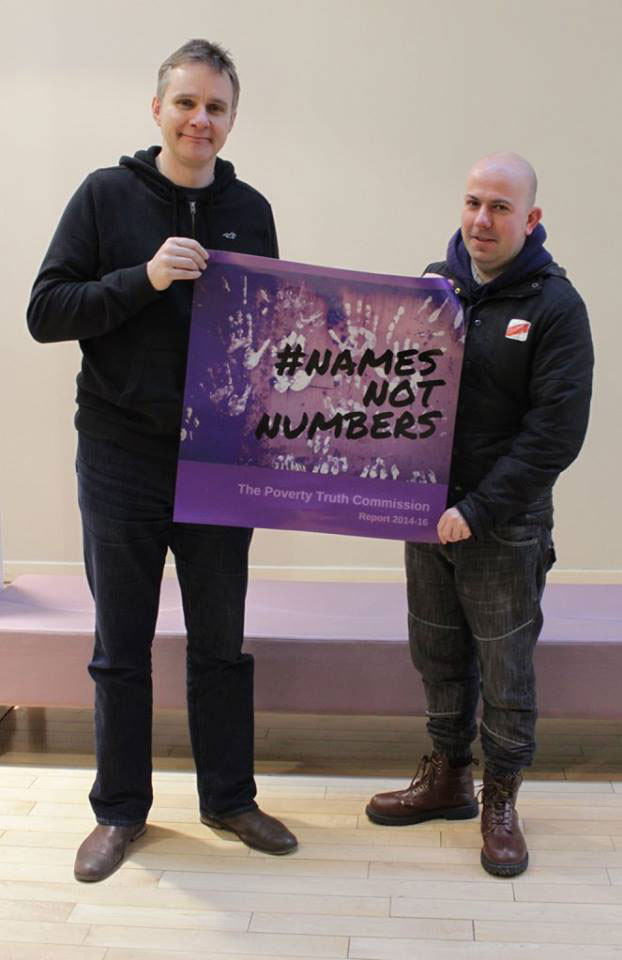
Poverty Truth Commissioners at the launch of the “ Names Not Numbers” report.

The Poverty Truth Commission in Scotland brings together people living in poverty alongside key decision makers. This has included members of parliament, the head of education, the head of health and even celebrities. Everybody tells their own story and shares it with others. What is relevant to people in the room is what will be discussed and worked on. I was part of the 3rd round of commissioners. Each commission runs for eighteen months. In this commission, the themes that came out of the discussions were: “food poverty”, “dignity and the power of stories”, and “the cost of school”. A report, Names Not Numbers, was published with recommendations at the end of the commission. The 4th commission will start in January 2017.

I became involved with the Poverty Truth Commission in Glasgow two years ago. My friend was already a commissioner and thought it would be something I would enjoy doing. Previous to the commission, I had been suffering panic attacks and agoraphobia. I was isolated and lost about how to communicate and interact socially.

When I first started going to full commission meetings I wouldn't talk. I would be the one in the room listening to everybody; no one heard me. It took me five months to feel comfortable enough to talk in the room. I liked that it was informal and everyone was on first names. There were no titles and everyone was genuinely interested in what people were saying about their lives living in poverty. Poverty Truth gave me time without bringing attention to me and allowed me to speak in my own time with no pressure. I think otherwise I would not have gone back! As time went on and I regained confidence, I was starting to feel like me again.

I got to know the other commissioners through the different groups. In one of the small groups with Poverty Truth we spoke about the stigma of being in poverty. Even now I still get angry when I watch programmes on TV about how people on benefits are portrayed. It's undermining people on benefits.

Allan, a previous worker with Poverty Truth, asked me to do a talk in Edinburgh with him. So I went from not speaking at all to standing in a room of around 100 people to speak about the new Scottish welfare system coming into effect in 2017. I was never under pressure to do this and Allan phoned regularly to make sure I was ok. I was speaking about my life on benefits as a lone parent with 2 teenage children. I said how I have not wanted them to be stigmatised by the label of growing up in poverty and I talked about the need for decision makers to be respectful and treat people with dignity. I had always hidden and felt ashamed even to say I was living in poverty and I had hidden that from my sons. I do not buy myself clothes or have nights out. With what money I have, I make sure they are never deprived or are any different from their friends, except with holidays. It still hurts me even now that I cannot afford to go away anywhere with the boys. I no longer feel ashamed since talking to people in the same situation. They totally get it and understand it and that has made a big difference to me personally.

I have always felt supported and included at the Poverty Truth. I am part of a working group in the Poverty Truth Commission focusing on the school clothing grant. Parents that are on benefits and low income get a grant to help buy a school uniform. After I researched the amounts for grants in different local authorities in Scotland it became apparent that not only were the amounts varied but they mostly never covered the real cost of a full school uniform. We are planning to meet with Deputy First Minister and Cabinet Secretary of Education John Swinney to discuss a minimum amount for clothing grants that is fair to everybody who qualifies for one in Scotland. I am really looking forward to seeing the conclusion of the past year’s work on this. I am also in a working group on the new social security powers coming to Scotland.

The Poverty Truth gives people like myself an opportunity to discuss through group work everyday matters that affect them. It also offers the chance to let others see we are not alone with our struggles and can overcome illness and setbacks. I am very aware it's not always easy and some people will keep struggling with their own situation. I do believe in hope and happiness. I like justice and I hate injustice for people who may not be in a position to speak out for themselves. I feel strongly about representing them. This will also make the future better for myself and my boys. Hopefully it will be a more fair society.

​Written by Caroline Kennedy
Poverty Truth Commissioner, Glasgow, Scotland

0 Comments

The Importance of Recognition

17/11/2016

0 Comments

 
Picture
Being involved in the process of making a project like the Roles We Play was interesting because you had other people to bounce ideas off of and that meant we got a more balanced and inclusive answer about the daily lives of people in poverty. The book is our way of showing that we all have a meaningful role to play in society and if you take away those roles you are taking away a huge tool that can be used in the recognition of poverty.
​The process also meant proving to yourself that you’re worth more than other people think because a lot of people think that they’re worthless and have nothing to contribute. Each one of the people in the book do have a purpose, they do have a worth and they’re needed in society.
Something as simple as running an after school club, even standing up for the old boy next door who’s lonely and has nothing, he can’t go to the shop so you go for him, if you don’t go then the government would have to employ someone to do it, so in a way you’re saving them money.
Being a part of the Roles We Play is important because if no one is involved then there is no recognition of what you are doing. Recognition is important because poverty is not just something that can affect ‘other’ people. It’s not just cash poverty, someone can be a multi-millionaire and still have no quality of life. But at the same time a lot of people who don’t get recognition come from humble beginnings they don’t get the OBEs or MBEs. If nobody recognises it then it doesn’t exist.

What have we achieved so far?
Last year we took the Roles We Play on the road and went to several different cities across the UK and did events similar to this. When we went to Norwich it was nice to meet people who were involved in doing lots of different things and some of them actually thought that we can do something similar so they can be recognised.

Going to Nottingham University last year was interesting on a different point of view because we were going into an educational establishment where the tutors were wanting us to educate their pupils about poverty because a lot of the students wouldn’t believe that there was an existence of poverty in the UK.
The tutors were hoping that we could have an influence on people who had little understanding of what poverty means because we are experts by experience, we do live it every day. Between us we probably have more experience and a broader collective knowledge than any government committee, we can be honest with each other and share things without fear of judgement.

Poverty should be on the national curriculum and everyone should know a little bit about it because it is never going to be completely eradicated, someone is always going to have more than somebody else, but that somebody who’s got less doesn’t deserve to be treated as less. You often find that people who have less are often treated as ‘worth’ less and they’re not.

It was very important for the group that their work was recognised officially by Sheffield University when we presented our work to around 60 students.
Even though we have presented a social work module before in a university setting ..this was the first time we have presented this piece of work..our work... a body of work created and developed by people with an experience of poverty as part of a university course.


By Eric


Here is an article produced by Sheffield University which demonstrates the impact of our Roles We Play - Poverty Experts panel discussion/workshop:

http://www.sheffield.ac.uk/socstudies/scsnews/atdfourthworld-1.662269
Picture
0 Comments

Creating Space

9/11/2016

0 Comments


Picture
44908_annualreview2015_web.pdf
File Size: 642 kb
File Type: pdf
Download File

“With so many problems and so much stress, it is like the walls of my home are closing in on me. I have no time and no space to think.”

A life in poverty is one spent rushing around trying to find solutions to an endless stream of problems: financial, practical, physical and emotional. I have heard it described variously by those who face it every day as “a whirlwind” and “a prison”.

And yet, in a political climate where many living in poverty feel frustrated and rejected by the system, and where their poverty prevents them from contributing to conversations and debates on the issues that affect their lives, it is imperative that people have the chance to speak, share and listen to others.

Projects like Giving Poverty a Voice aim to create spaces where people who live in poverty can meet, voice their views, be listened to, gain information, think together and analyse what they share. This process is not possible without such spaces. One participant told me, “I have always known what poverty is but coming here helps me to think about what causes poverty and how to fight it.”

The residential breaks of the Getting Away From It project offer a less formal but safe space to meet others in the same situation. A simple conversation, a sharing of experiences or an offer of moral support can be all the more important when opportunities to gather and socialise can be rare for those who struggle with the effects of social exclusion. As one mother said recently, “I can be myself here; nobody is judging me.”

Creating spaces to allow for the building of friendships and support networks is what ATD Fourth World does. Sharing these spaces with others meets a need rooted deep within human beings and creates confidence, mutual learning and knowledge. This can be a real cornerstone in creating inclusive and positive change.

Thank you all for all your continued support,

Moraene
On behalf of the National Co-ordination Team
ATD Fourth World UK

To read more about all of our work in the UK ATD Fourth World’s Annual Review is now available:

www.atd-uk.org
Picture
0 Comments

Reaching the hardest to reach

2/11/2016

0 Comments

 
Picture
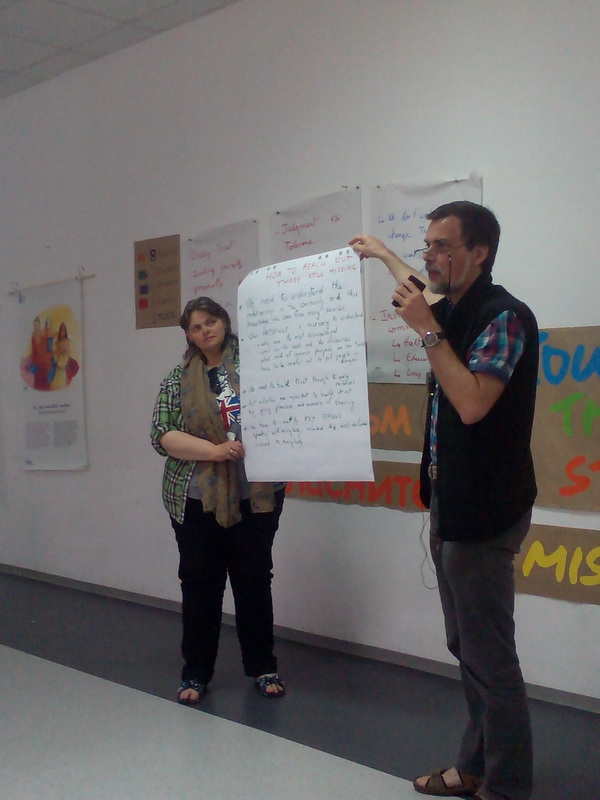
The capacity building residential workshop on outreach work came about due to all the work that ATD Fourth World do with people living in poverty. We all wanted to know of different ways to reach out to the “missing people”: like shy ones or really isolated people, and how we could reach them. So members of ATD Fourth World in different countries started their own meetings to find out different ways people were using to reach people in their own communities. Then they came together to share their ways of reaching out to others.


In UK, after a first meeting in 2015, we came together again to do a second meeting this year and ask questions and give our answers. It is always nice when we spend time together and get to know new people and their views. It is our chance to come together to discuss what we had all been doing over the year and how it was going and where we were taking it.


The first question was, “Where do you meet isolated people?” Some of the ideas we got were: trains and buses, school playgrounds, doctors, churches, day centres, shopping, mother-and-baby groups, and many others. We looked at people that we had met and how we had helped them. There was one story of a lady who was in the park with all her bags and her child and had nowhere to live, as she had walked out of a domestic violence relationship. One of the participants sat with her and talked to her because she noticed that she was in need. And she got her the help that she needed and took her for something to eat and a coffee. A lot of us go on instinct and gut reactions and can tell when people need help and will go out of their way to help them. We also asked the question: “Have you faced any challenges when trying to reach out to excluded people?” And we found that despite the challenges of having abuse and the stress of helping others people we were still willing to go out there and find the excluded and isolated people, which is what the outreach programme was hoping to achieve.


When we looked at where we wanted to take our work on outreach, we found that we still wanted to do more but that we needed to support ourselves as well due to the severity of the cases that we were helping. If we aren't careful we will be stressing out because we are taking on other people's problems as our own. We found that even just having someone at the other end of the phone to go to, whether it is to ask questions of what roads to take to be able to give help to others, or even just to chat about things, was one of the main things that we needed to carry on reaching out to others. That's why it is good that we are doing outreach with ATD Fourth World as they are in a position to help us to succeed.


Tammy ATD Fourth World Uk

0 Comments

Genuine participation is about the right to be taken seriously as a human being

26/10/2016

0 Comments

 
Picture

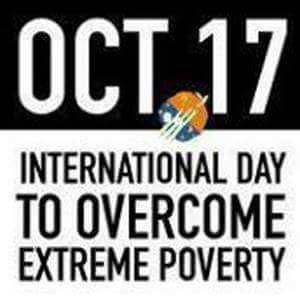
October 17th is the United Nations International Day for the Eradication of Poverty, a day that ATD Fourth World created and lobbied for. It is day when the voice of people living poverty and hardship is at the centre, where they have the platform.

The theme this year is “Moving from humiliation and exclusion to participation: ending poverty in all its forms”..

Kathy in preparing a presentation to be shared at the Scottish Assembly for Tacking Poverty speaks about how genuine participation is really about the right to be taken seriously as a human being: to have your intelligence recognised, your pain acknowledged and your desire to act understood.
These are her very important words on participation and powerlessness:

Why should money define who we are? We are meant to live in a democracy where everyone's voice is important. Instead we have a centralised bureaucracy dictated to by career politicians who are not listening or representing ordinary people.

Our society is run by people and organisations even NGOs, who have had money, and who have had opportunities in life and a good education, who go to work then go home again not knowing what the harsh realities really are like to live with. But because of the position and status and power they hold, they think they have a right to have opinions and make decisions about us and our lives. Thus causing barriers, powerlessness and consequences on our lives.

There are some NGOs who, when people feel helpless to know how to help others, are rude and ignore people who live in the realities. We might not have money but we need manners and respect from institutional professionalised charities, and government. People who live in poverty are intelligent. We do have a brain and many talents and skills.

We are much more than something to be decided about, herded from one opinionated social policy to another, born of popular opinion to be pandered too. We are all part of a human family living many struggles. Money, degrees opportunities in life will not define us because it's only luck that people have those things. We cannot completely control what happens in life but homelessness, poverty can happen to anyone.

Will the hierarchical structures and bureaucratic remits and policies be enough to combat poverty in contemporary times? Is it enough to stop voting because it does no good because politicians don't listen? Or let charities, that do not represent most of British society, speak for people who cannot access them, and are excluded from having a voice in any process.

Perhaps its time to look at coming away from comfort zones to have a voice, no matter who we are, as equals. It's our lives that we live, any decisions made about us by others that affects us, means we should expect to have humanity and respect and have a voice and say in all of it. Our lives matter!!!!
​

Kathy brings home the truth that deep and meaningful participation requires deeply respectful relationships with people in poverty. Can we meet her challenge?

by Kathy and Tom
​ATD Fourth World
Picture
0 Comments

New Orleans: Mass Incarceration is a toll on people living in poverty for their inability to pay the bail bond

17/10/2016

0 Comments

 
Picture
It is not a secret! On any given night, half a million people will sleep in a jail cell in the United States because they cannot afford to pay their bail bonds. Many of these individuals are locked up for weeks, months, or even years for nonviolent offenses, such as traffic violations or drug use. The system allows people accused of this kind of offense to be released while they await sentencing—as long as they can afford whatever bail the judge has set. This unfairly condemns low-income people to remain in jail even if they are innocent, which can have serious consequences for their relatives and their income.
Meet Ms. Louise. She and her seven children live in a two-bedroom apartment in New Orleans, the city with the highest rate of incarceration in the world. Without a stable job and income, it is difficult for her to raise her children and provide them with a decent childhood.
Unfortunately Ms. Louise, despite being a hard worker, has had to change jobs three times in three months. This is because, instead of showing up for work, she has had to accompany her son to court. In fact, her efforts were most often wasted, because the judge would postpone the hearing for no apparent reason and without prior notice. She says, “The bail is too high. I can’t pay that! I can’t even pay for my bus ticket! I am sick of the system, we are all locked up! I can’t eat; I can’t sleep.”
Ms. Louise isn’t the only one facing this situation. Bail bonds are becoming more and more of a burden for people in poverty, both economically and psychologically.
However, Congressman Ted Lieu introduced the “No Money Bail Act.” This bill seeks to address the issue that Ms. Louise and many others face – the punishing of so many low-income black families because one of their relatives was unable to pay a bail bond.
The “No Money Bail Act” is a critical opportunity for the criminal justice system reform. The Orleans Parish Prison Reform Coalition, the American Bail Coalition, community organizers, and government leaders are calling for a decrease in the number of unjustified incarcerations, particularly for those in poverty. They are looking for alternative policing approaches that better meet the needs of all communities.
Although the Mayor's and the Sheriff's Offices have led a joint planning effort to develop a proposal that will reduce mass incarceration, strengthen public safety, and better serve some defendants, these offices fail to admit that the bail bond discriminates against those in poverty. Unlike those who are able to pay the bail fee, the poor are often unable to pay and thus cannot find another way out. This inability can force these individuals to lose their jobs, houses, or even custody of their children, simply because they are unable to pay the bond following an accusation of a non-violent crime. It has destroyed many poor families. Mass incarceration does not and will not strengthen and make the communities safer.
Prisons are run by private profit-making companies. This leads to abusive incarceration. On top of that, even when a person is allowed out of jail on parole, the conditions are very hard to meet. The person must account for all movements, and pass a urine test every week. If these conditions are not followed to the letter, they go back to prison.
As long as poor people are not part of the conversation and decision-making process in the criminal justice system reform, the mass incarceration of poor black people will not stop. All parties must be willing to bring a better solution in the criminal justice system in order to reform the system in an effective way that will stop mass incarceration and the imprisonment of people in poverty.
By Maria ATD Fourth World USA

0 Comments

Ethical Dimensions in Research: Children as Co-Researchers

12/10/2016

0 Comments

 
Picture
Ethical Dimensions in Research: Children as Co-Researchers
For Rachel Bray, researcher at the Oxford Institute of Social Policy at the University of Oxford (UK) and specialist in childhood, family policy and poverty, working ethically with children is about understanding their everyday lives and social worlds, and trying to “get into their skin”. Speaking about her experience with children living on the streets of Kathmandu, Nepal, and with young teenagers in South African post-apartheid society, she explains the importance of qualitative and participatory approaches that give children an active role in research based on a relationship of trust and mutual respect. Enabling children to be co-researchers means giving them a space to express themselves where their voice and thoughts are heard.
As ATD Fourth World prepares to embark on a 3 year participatory International research project in link with Oxford University; Rachel Bray is interviewed by Monica Jahangir of ATD Fourth World.


When you started your research about street children in Nepal, you were volunteering in a local non-governmental organisation (NGO) that offers drop-in facilities for children working and sleeping on the streets. Why was it important for you to be in that space, rather than working on your research more independently?

Rachel Bray: As an anthropologist I wanted to be in that space and understand how people, social organisations, society, were thinking and considering these children living on the streets. There are different ways in which society regards them: either with extended care because they are considered more vulnerable than other children, or through denigration or exclusion on the basis that they are doing something that children should not be doing. Also, another reason for my presence was that I wanted to befriend the children, gain their trust, and start to see the world from their perspectives I wanted to understand whether they really were technically homeless and as vulnerable as NGOs or international organisations tended to depict them, or if they developed social competences allowing them to adapt to their changing environment.

So for me these two poles – the political portrayal of children as victims or delinquents on one side, and the political implications of the experience of young people on the other – were not two poles really; they were two sides of a coin. Being in this setting enabled me to understand that these children were capable and vulnerable at the same time. They relied on NGOs to fulfil some (but not all) of their needs, while at the same time NGOs were somewhat dependent on having a needs group of “street children” to justify their existence and to raise funds.
How did you come to adopt a qualitative approach for this research project? Why did you choose to work not about the children but with them?

Alongside my voluntary role in the Nepali NGO, I was working with a biological anthropologist collecting a series of data on height, weight, fitness and stress levels. These told us a lot about their physical health and provided some clues about their psychological well-being. In a survey, we also asked young boys aged 9-17 years where they came from, what they did before coming on the streets and why they came on the streets. I quickly realised that this method was giving us a distorted picture of reality. I could tell in our discussions with the boys that they had little or no motivation to tell us anything in depth about their lives and the reasons which prompted their choice to live on the streets. They didn’t know us very well; the questions we were asking were surface level and not appropriate. They induced the idea that the choice to leave the family home resulted from a single decision circumscribed in time. Whereas it soon became clear that it was a series of events, opportunities, and coincidences that led them to sleeping rough, begging or rag picking. I realised the survey approach was not getting us anywhere; and so an ethnographic approach combining sharing meals and work time, conversation and building friendships was the right way to go.

Talking about befriending, how did you manage to foster these relationships of trust and friendship so children could open up to you? In which spaces?

What was interesting was that the children saw me as a friend of the NGO – that is to say as someone close to the NGO, close to the staff but not totally part of the staff. This somewhat hybrid role allowed children to have trust in me as an individual, and a friend of the NGO. And I also spent a lot of time with children outside, which other social workers would not necessarily do. I would be going to the junkyard with them, early morning, around 5:30 or 6 am, taking tea with them, listening to stories of their nights’ work scrap collecting, going to eat with them on certain occasions, going out in the mountains on day trips sometimes, all sorts of things. And they started to talk to me about their ambitions, such as wanting to become motorcycle mechanics. They identified successful companies in the city and asked me to accompany them in approaching directors to discuss training opportunities. Together we organised six-month apprenticeships for five young men in their late teens.
I believe that one way to build trust with children is to show my trust in them, through concrete actions. I would for example lend my bike (something no one else dared to do!) or pay for tea, knowing they would return the favor in the coming days, something they found to be mutually honouring This is what anthropologists sometimes call informal delayed reciprocity. At the end of the day, it really boils down to the best way possible of “walking the walk” with these children, and being in spaces where I understood both their everyday concerns, desires, opportunities, connectedness…, as well as the challenges and barriers produced by the society around them.

In 2001, when you joined the Centre for Social Science Research at the University of Cape Town in South Africa, you further explored participatory research, this time involving teenagers directly in the process as co-researchers.

In this research project, we wanted to understand how the end of apartheid affected the life experiences of South African children and youth. What was everyday life like for the first generation of young people growing up in a democratic South Africa? What were the similarities and differences in the lives of teenagers coming from neighbourhoods that were once separated based on race and class?

During field visits to schools in the Fish Hoek Valley (south of Cape Town), we explained to students that we wanted to understand young people’s lives from their own experiences and questions, for example through weekly meetings in focus groups and art activities, and discussion with other young people about social, political, historical and personal issues. Soon, youngsters aged 17 or 18 expressed interest in joining our research project. They were eager to gain skills in social research (such as how to conduct an interview, use recording tools, and also to have the opportunity to write, work with journalists, etc), but also to meet other young people from different neighbourhoods and find out about “what was going on in the lives and minds of young people living in the valley”, as said one of the teenagers. These six young researchers (three boys, three girls) called themselves the “Tri” group to refer to their interaction as they came from three sociologically, culturally and historically different

What were you careful about in your work with these young researchers? What were the methods used to engage them?


We aimed to go beyond the tokenistic or even exploitative involvement of young people found in many studies. Our research was designed to provide young people with a space where they could raise and pursue topics they felt were important to them.

For this, we used a variety of methods, some open-ended, others specifically designed to obtain additional information to some quantitative elements we already had. We kept journals of our observations and conversations with and about children and adolescents. We combined one-on-one interviews with participatory group activities, including art and drama, which enabled young people to express themselves. For example, we asked young people to map their neighbourhood, which allowed us to understand their mental representations of where they lived, to map their support networks (family, circle of friends etc.), or to illustrate their life stories with themselves as the heroes. Other young people, who were struggling to express themselves, were equipped with cameras, so they could to take photographs illustrating their diaries.

After an introduction to interview techniques and issues of consent and confidentiality, young researchers from Tri group also interviewed their friends and relatives, about their everyday lives or on personal aspects. We always cross-checked data produced by young researchers just as we did for our own data. Our weekly meetings with the group allowed them to share their impressions and questions on ethical issues3. We associated them in the analysis of the collected information. Not only did we learn a lot from their research, but the partnership with Tri became an important source of learning about how to manage and conduct youth-led elements of a wider research project.

In your discussions with young people, you must have discovered some very personal aspects of their lives, especially for the most vulnerable ones facing poverty and violence. How can these children experiencing very difficult lives be protected to avoid further harm?

It could happen that some children involved in our research were in situations of great vulnerability or violence. If a child is beaten or abused, then one must stop and think as sensibly as possible with the child, trying to find out how much the child is willing to disclose, because there might be many reasons why the child doesn’t want to disclose very much. And we must understand what professional support exists in the immediate locality in order to know whether it’s better for the child to alert a medical or social service really close to their home, or whether this could lead to social exclusion owing to close connections between staff and family or neighbours, which may compromise the child’s privacy and make them vulnerable to further risk. It is also important to remember that in South Africa, segregation has resulted in high disparities between neighbourhoods in terms of health and social services.

To sum up, an ethical response to face violence and vulnerability must always be based on a deep understanding of the child’s family relationships and neighbourhood relations, in order to establish a more protective solution. Of course, this has to go through a good talk with the child about who she considers to be the greatest source of protection in her life.

What was the impact of this participatory research project on the teenagers? Did it contribute to their emancipation?

The research project allowed them to initiate a reflection about their lives, identities, neighbourhoods, teachers, and relationships with social services. [They could even] deconstruct the stereotypes they [might have had] about those who lived in different neighbourhoods. When the Tri group shared about their life experiences, they were surprised to see that their lives could sometimes be so similar, despite all the differences between them. This helped strengthen their sense of citizenship and belonging to the “rainbow nation”.

But participatory research also had more concrete consequences in their life choices, in terms of decision-making about their training, further education, or going towards a particular career. We had outstanding examples of two young people taking full advantage of the space they were given to express themselves during the research. Ganesh, a street child I met during my doctoral thesis, had an undeniable artistic talent that I had encouraged him to develop. He is now successfully based in Amsterdam, after having studied at the Rietveld Academy, a renowned art school in the Netherlands. The other is a young South African participant, Simphiwe Ndzube, who had enjoyed our art-based methods and decided to continue on this path. He is now a well-recognised artist in his country. So the space for expression and creativity offered through participatory research can be a rare occasion for young people to help reveal themselves and reach their full potential in their lives and careers.


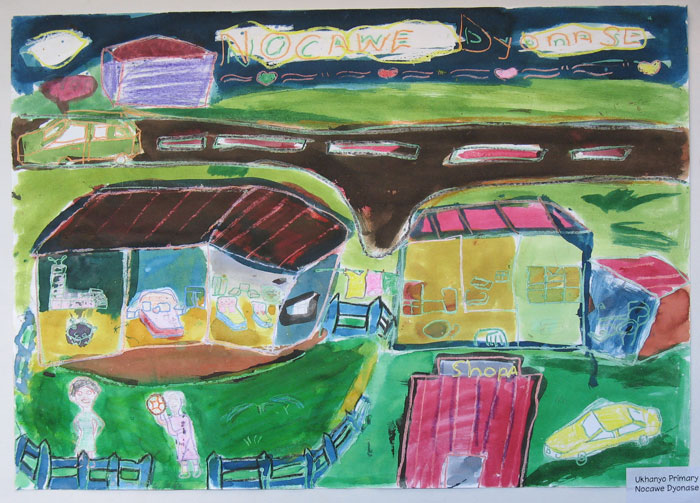
Map of ‘our community’ by 9 to 13 year old township residents.
Picture
0 Comments

European workshop on reaching out to the most excluded people and communities

5/10/2016

0 Comments


Picture
A European workshop on the theme: “Toward those still missing’’ was held place in Sofia, Bulgaria, 25 to 28 May 2016. It brought together community workers from different organisations in Romania, Hungaria and Bulgaria as well as members of ATD Fourth World from Poland, Switzerland, Belgium and the United Kingdom. The participants all actively strive in their daily lives to reach out to people whose valuable contribution in society is missing due to the fact they live in persistent poverty. The participants came from all walks of life. Several participants lived and worked in their local communities.


During the first day of the workshop, each delegation shared the story of someone from the community they work with. Among all the stories we were especially moved by the story of Nicoletta from Bucharest, Romania. She is a mother of five, living on social benefits. She would like to have a job which would make a big difference for her. She could stop relying on social benefits. She is going through a lot but still helps her community by taking care of the streets, helping to keep them clean. No matter what life throws at her, she always keeps her iron will power and tries to find solutions to the problems that happen where she lives. She says that no matter how difficult your life is, you can make a difference.


We also heard how the child care system in countries like Romania or Hungary, though different from the British one is still something that is quite present in people's life. They spoke of how families living in poverty can struggle to keep their children with them and of the stress and pain that this can cause.


While people were shocked to hear about the bedroom tax in UK, as nothing like that exists in their contries, it was shocking to hear how homeless people in Hungary can be blamed and punished as it's now written in the constitution that people shouldn't live in the streets. Discrimination against homeless people is therefore very strong. Homelessness is dealt with through repressive means.


The second day, participants shared their experiences, their know-how as well as their struggles and how they overcome them. It was really interesting to hear the experience of two young women in an excluded community in Plovdiv (second biggest city of Bulgaria). They felt it was important to reach out to this community and were looking for some tools do it. They had noticed that people were often chatting outside, so they started to bring white plastic chairs and just let people come and sit on them. They then started to listen to what people wanted to share. Usually nobody is interested in their story so it was really important to just sit with them and listen to them. It was a first step to build a trusting relationship with people from the community.


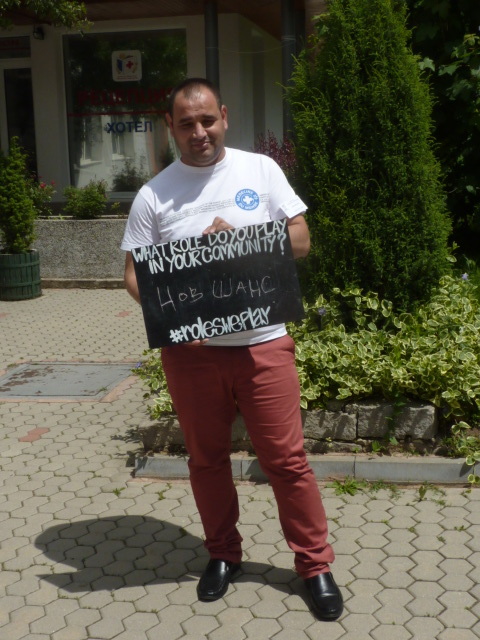
Later that day several workshops took place, including one facilitated by the United Kingdom delegation, using the Roles We Play to invite participants to reflect on the role they play in their communities.


Finally, on the last day, participants exchanged experience, advice and ideas on several different topics including how we support one another when we're struggling to reach out to people. We heard the experience of two community workers from Doctors of the World in Bulgaria. The neighbourhood they're working in is excluded from the rest of the town and has only one way in or out through a tunnel, maintaining the community in extreme isolation. This community lives by their customs and tradition which can be hard for others to understand. There is a need to acknowledge and respect these customs and traditions in order to reach out the community. In this community women get married and have kids at a very young age. These community workers are trying to help young girls and young women to access planned parenting, without imposing anything on them but working hand in hand with everyone in the community. When they are struggling at times, they express how important it is to be able to turn to each other in the team. They can gain strength and support through each other by being present and being ready to listen and share advice.


Overall, it was great for the ATD Fourth World UK delegation to have the opportunity to participate to that workshop. It was really enlightening to listen to all the different stories from people working in very diverse communities, diverse countries, and hear the common struggles they're all facing but also see their common will to reach out to the most excluded communities and the most excluded people. Kalin, from Bulgaria said that before coming to that workshop he didn't think that many people had any interest in working with poor people and that the three days made him understand that there are other people who shared that will and that they were not alone.
​
By Amanda and Emilie ATD Fourth World


Picture
0 Comments

What does it mean to be an expert?

17/8/2016

0 Comments

 
Picture
Whenever a group of ATD Fourth World activists get together, something happens. At the end of a residential working session designed to help activists to discover each other - beyond ATD Fourth World - we had a list of amazing actions, all performed by people who had been written off…called lazy scroungers and benefit cheats and scum by politicians and the press.
When everyone was together one participant said: "We need to get this message out there". So began a journey.

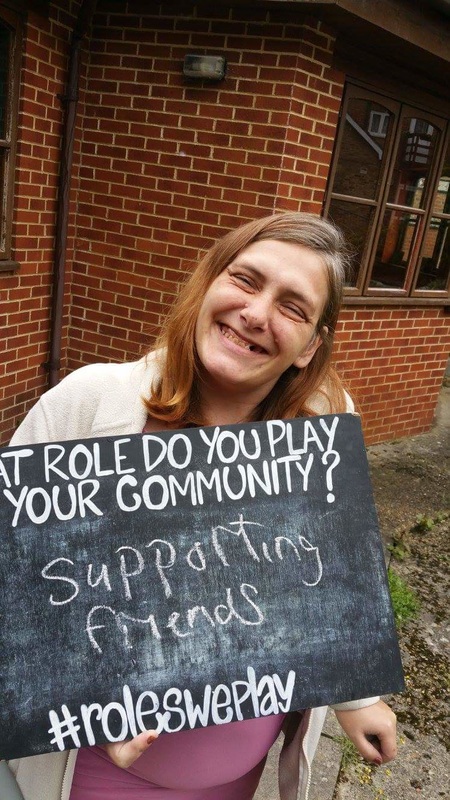
Working with a photographic artist an exhibition of portraits were created, but the reach was limited. Further portraits were taken, accompanying texts were written "in our own words" and participants gave their images a title. This became the book and new multi-media exhibition The Roles We Play: Recognising the Contributions of People in Poverty
www.therolesweplay.co.uk

In discussions about how best to use this work and how to reach a wide public, it was decided by our group to take our work on the road.
We started a process in which the participants would take the book and exhibition out to a variety of venues meeting the public face to face, in community centres, libraries, universities.
Along the way it was decided to work with other anti-poverty groups, to give their members a voice too. This needed to have a title that was inclusive of new people, all of whom had knowledge, experience and expertise of the realities of poverty.
While politicians, researchers and academics may have ‘book learned ‘and other acquired knowledge of poverty, those who had lived experience were the real poverty experts - great title we thought and began to expand beyond London, to other parts of the UK.

These panels of Real Poverty Experts reveal to audiences a diverse route into, and lived experience of, poverty and an opportunity for audience members to meet and talk to the panel, take part in workshop and discussions, and often over refreshments, in a less formal environment.
The feedback from these sessions has been very positive and as a group we feel we are getting more confident and support each other a lot.

The journey that begun some years ago has been a learning curve, building confidence and skills for participants, widening ATD Fourth World's network of organisations, including new people, all while influencing others to rethink their attitudes to people living in poverty.
Don't think though that the journey is over, if it was we would not be here today. Every journey is a series of steps and now we need to think about the next steps forward.

Last week we had another residential working session at Frimhurst Family House to discuss as a group: What does it mean to be a Real Poverty Expert, how we feel about the term and what questions we have.
One participant said: “We have a lot of lived experience in this room, years of living in poverty… years of making ends meet… years of bringing up our children well… years of resisting and struggling through… we have a lot to be proud about and to stand up and speak about. Yeah we are experts!!”

An Audience with the Real Experts on Poverty is a project led by individuals with an experience of long-term poverty and social exclusion in the UK, supported by ATD Fourth World and link with other anti-poverty organisations.
The project will stimulate constructive and inclusive public debate about the portrayal of people who experience poverty and social exclusion in the UK. It will provide opportunities for people living in poverty to develop their capacity to speak out from direct personal experience and lead the debate as experts.
The project aims to challenge contemporary society’s views on poverty and social exclusion. It also aims to recognise the positive contributions people in poverty make in society outside of paid work in order to counter the pejorative language and imagery so often used in the media.
The project aims to create public spaces where people in poverty lead the debate contributing through first-hand experience, collective knowledge and expertise. Public workshops and panel discussions will explore the multi-dimensional nature of poverty. This will create spaces for real open dialogue between people in poverty and the public shedding light on misconceptions present in society today.
People with first-hand experience, collective knowledge and expertise of a life in poverty are developing this new strand of action. They will lead in the design and delivery of interactive 'poverty awareness' workshops, public panel discussions and multi-media presentations in diverse settings.
In addition to developing the links already created with universities, schools, community groups, professionals, academics and practitioners, the project seeks to build networks and collaborate with grass root and community based organisations across the capital and nationwide recognising others who stand up and speak out on poverty and social exclusion.

By Moraene and Dann
ATD Fourth World


Picture
Picture
0 Comments

Bulgaria: A Workshop to Overcome Poverty

10/8/2016

0 Comments

 
Picture
For 18 months, two of ATD Fourth World’s Volunteer Corps members have been meeting people and groups in South East Europe, to learn about initiatives they take alongside people living in extreme poverty (In connection with the Forum on Overcoming Extreme Poverty). For almost a year, these volunteers have been living in Sofia, Bulgaria, where they are involved in a local initiative to build a sense of community with the inhabitants of a disadvantaged neighbourhood in Plovdiv.
In order to start a dialogue and to share experiences and questions among the people and groups they were meeting, a workshop was organised in Sofia, on the theme “Towards those still missing”, on 25-29 May 2016. How can people reach out to those who have the hardest lives? How can we make sure that their experiences are taken into account? To expand on these questions, 26 participants joined the workshop from Bulgaria, Hungary, Romania, Poland, the United Kingdom and ATD Fourth World international guests. Others from Macedonia and Romania prepared for the workshop, but ended up unable to participate.
All the participants act in solidarity with young people, men, women, or children whose dignity, human rights, and humanity are not respected. With others, they are looking for ways to make society not only inclusive but also people-centred. Some of them are living and working in their own communities. For several, this workshop was their first opportunity to participate in a meeting held in five languages.
A diversity of contributionsEach group prepared written portraits of people who live in extreme poverty. One was an interview of a mother in Bucharest (Romania) who is raising her five children in a deteriorated neighbourhood:
“It’s difficult to live here. I don’t have a job and also I have some health problems. I don’t think I’m the only woman in this situation. The lack of decent living conditions is general. What I want from the bottom of my heart is the well-being of my children, to have a job, a house, and a normal life. That means food on the table, a washing machine, running water, electricity. Politicians only think about us every four years before elections, but besides that, they don’t care at all.”
A portrait from Hungary showed a huge gap of misunderstanding between a judge and a mother living in a disadvantaged neighbourhood. Her struggle to search for a job led her to leave her children alone at home. The judge criticised her for this as well as for the fact that the children miss school. They are now under surveillance by child protection services. But what could the mother do when one of her sons was threatened by other children at school and was too scared to return?
Participants from Poland pointed out that when you are homeless the lack of everything (toilets, housing, food…) has strong psychological consequences: “When you have suffered from hunger, you may forget, but your body doesn’t.”
Several people spoke of their feelings of powerlessness in the face of extreme poverty. Moni (from Hungary) said she grows discouraged when she sees that some families in her small town do not manage to take advantage of services and opportunities that are offered to them. She added, “Other members of the community and I don’t understand these families but we continue to try to understand them.”
Trying to understand and keeping in touch are common goals for all the participants.

Expertise in reaching out to people who have the most difficult livesParticipants told one another about their ways of building relationships with people living in extreme poverty. Common approaches include:
  • The important thing is to build trust with people in the community. Some of the participants are part of the community, while others visit regularly. Trust can be built with “simple” approaches, such as coming to play with children, or visiting with chairs in order to sit and chat with people. For many participants, art and creative activities are crucial tools for building trust and rapport. This can mean attending cultural events or doing activities such as circus, dance, drawing, music, or theatre. All of these activities offer key moments that build trust and provide starting points to working together.
  • We need to be present in the community if we are to understand who the most disadvantaged people are, and to learn about their needs, their potential, and what projects we could develop together.
  • We also need to identify key people— not necessarily leaders in the neighbourhood, but peace-builders.. Some of these key people attended the workshop and explained their role. For example, Câty from Romania says, “I’m doing nothing special. I am just speaking with everybody.” Kalin and Gabriella from Bulgaria say, “We don’t want to change traditions; we want to offer choices and alternatives. You can change yourself and make this change visible to others.”
At the end of this discussion, Ionut from Romania pointed out that, no matter what approach is used to reach out, “It’s all about [respecting] dignity: dignity in the way of reaching out to people, dignity in the way of having contact, of talking with them, of respecting their traditions, their religion, their way of life.”
Other discussions took place about challenges participants are facing: influencing local and national policies; finding sustainable and ethical funding; communicating about their work to gain credibility and recognition; or supporting each other to persevere in our struggle against extreme poverty.
Participants decided to continue their exchanges, for example having a Facebook group, by exchanging documents, and perhaps by planning another workshop. This first workshop was a chance to brought together different people’s energy and sustain motivation. As one participant said, “I never imagined that there were so many people involved in fighting against poverty. It gives me courage to continue.”
​
From ATD Fourth World’s International blog.
Picture
0 Comments

Living in poverty is a denial of human rights !

3/8/2016

0 Comments

 
Picture
Picture
Last summer, on a warm afternoon, a group of ATD Fourth World's Giving Poverty a Voice project went to the British Library to see an exhibition celebrating 800 years of Magna Carta. The links between Human Rights and Poverty was the theme chosen by the project participants to explore for the year ahead.
Why human rights? Because it is easy to deny the human rights of people living in poverty who do not have the power to fight for them, as people living in poverty we have all experienced that denial.
As one of us stated: “Not enough people care about the rights of others, too many people only care about their own rights. We need to do much more to ensure that the rights of less fortunate people are protected and not abused”.
For this reason we needed to be educated in the origins of human rights (hence the Magna Carta) and the reality of what they mean today. After a year of meetings, discussions, learning together and from each other we came full circle - back to Magna Carta.
So, on another warm summer's afternoon, we made our way to Runnymede - site of the sealing of Magna Carta by King John in 1215. There is a small monument on the site but there is also a wonderful art insulation in the middle of a field ten minutes from the memorial. This consisted of twelve bronze chairs, representing the twelve members of a jury, (the concept of trial by jury also originated with Magna Carta).
The chairs are named, "The Jurors" and were created by artist Hew Locke. The chairs are intricately decorated with images and texts that explore justice, representing events and people of significance across the ages.
We spent half an hour discovering the meaning of individual chairs then, because the chairs are meant to be sat on, we sat on them to decide and discuss together which image had most impact on us.
Most opted for the image of ancient Egyptian scales topped by Ma'at, the Goddess of truth, justice and balance.
In the discussion that followed, it became obvious that access to justice was so important because several members felt that justice is a human right too often denied to people who live in poverty.
“Even though we are given certain human rights, we still have to fight for them to be used correctly”, said a young activist who took part at the outing.
Sitting together, sharing a picnic, one man said "Knowing our human rights is important because you can't fight for what you don't know". Another person said, "To deny a person their human rights is to say they are less than human".
On chair number 5 was an image of Phyllis Wheatley, a freed slave, a poet and the first African American woman to be published. In 1779, she ended her poem, "Brittania Law" with the words,
To every Realm shall Peace her Charms display, and Heavenly Freedom spread her Golden Ray.
 
Written by Moraene ATD Fourth World

ATD Fourth World's Giving Poverty a Voice project strives to support people experiencing poverty and inequality in London to engage and participate in their communities and have their say on the decisions that affect their lives.
Using issue-based discussion forums, capacity-building workshops and examinations of the different opportunities and avenues to participate in the democratic process, our aim is for Giving Poverty a Voice to empower and encourage people to stand up and be heard.

To read more about Giving Poverty a Voice
http://www.atd-uk.org/projects-campaigns/policy-participation-and-training/giving-poverty-a-voice/

0 Comments

Inequality hurts

27/7/2016

0 Comments

 
Picture
I had a bit of a thought about the problem of inequality. Maybe for some, it’s not a problem. Maybe for some, there’s no fair way to tackle it. Either way, even if inequality itself isn’t a problem, its effects very much are, and therefore it needs to be tackled, and there’s always a way.

So how would I tackle it? Firstly, I would want to recognise the value of the human being, rather than their socio-economic status. We all have inherent value, and our biological traits dictate that value, not our parents’ wallets.

A particular scheme I came up with requires a billionaire philanthropist or two. Or of course, a movement that those people want to get behind and put their well-known names to. Currently we have huge businesses and wealth being passed from family member to family member. This means that the recipient hasn’t really earned any of the wealth being granted by parents, and those recipients have not had to compete to earn their status.

What I would do, were I a successful billionaire with a massive business empire, is grab as many people as I can from the ‘lowest’ echelons of society. I would seek out the people who have little or nothing, and I would show them how I became insanely wealthy. I would teach every single one everything I know about getting rich, and about my own strategies and tactics. This may seem redundant in today’s world, because they’d never have a shot at it, but that’s where my own wealth would come into it. I would provide generously for their own upstarts, guiding their development, and funding their own ideas. At the end of the scheme, I would ask them to come up with some form of innovation to tackle social issues, and every participant would win something big. However, the very best among them would become my own heir, gaining my business and wealth.

See, I don’t think inequality can be solved through a forceful approach by government, but simply by sharing. The scheme above would affect thousands more than just the folks I took under my corporate wing, because of the ideas that they themselves finally got the chance to put out there. However, it begins by not taking people as a ‘number’. It begins by seeing that everybody contributes in some way, and everybody has something to offer.

By casting aside the delusion of there being ‘worthy’ people and ‘little people’, as opposites, and instead embracing the reality that many of the poorest are in fact much harder workers than the CEOs of the world. Also, they’re often smarter. There are many examples of people from humble backgrounds breaking through… how many are there who never get the opportunity to do so? Michael Faraday, a bookshop assistant from a poor background became one of the best-known chemists in history. William Herschel, who had no education in astronomy, made his own telescopes and discovered Uranus.
The base of what I’m getting at is that everybody has worth, as a human being. Everybody has a role to play in society. it makes sense that from this basis of near-equality, we should find a way to directly translate that into opportunity for wealth and prosperity, rather than keeping people poor, just because they happen to already be poor. By putting opportunities for growth into the hands of those without, we can only go forwards and grow.

Seems like the benefit system perpetuates inequality, by breeding contempt for claimants, because they’re perceived as being a drain on resources. 
​

Paul, Thinker


0 Comments

Building a stronger more powerful voice for change!

20/7/2016

0 Comments

 
Picture


After a very successful presentation at the British Association of Social Work (BASW) summit in January ‘Talking about the future of social work’, ATD Fourth World was again invited to present at The UK Joint Social Work Conference (JSWEC) last week.


ATD Fourth World was presenting under the umbrella of the newly formed ‘Social Workers and Service Users Against Austerity’  campaign, alongside Dr Peter Unwin from Worcester university.
Our workshop was entitled Values, Ethics and Social Justice.
Amanda’s presentation spoke about ATD Fourth World’s Social Worker Training Programme, the importance of bringing parents voices to the forefront of the discussion and why she continues to take part in the programme.
Amanda delivered the presentation confidently to a room full of social workers, campaigners, academics and service users.
 
“My name is Amanda and I am a grassroots activist with ATD Fourth World. I first became involved with our Social Worker Training Programme in 2009.
The aim of the project is to bring together families living in poverty, academics and those working in the field to discuss and debate issues relevant to contemporary social work practice. We also look to find the best ways to present the perspective and experiences of those living in poverty so that they can have an input into social work practice and research.
 
This is my opportunity to try and make a difference for families that are struggling and have social service intervention in their lives. We try to give social workers a different perspective on poverty, hardship and how it hurts families. For me personally, my taking part in this work comes from my own experience of dealing with social service intervention. By me speaking out, it gives voice to those who cannot speak out for themselves. For all of us, the key thing is that social workers and families start finding better ways to work together.
 
Through the project we have covered a number of themes. These include the relationship between poverty and shame, the impact of material deprivation on social work practice, the politics of recognition and respect and applications for the Capabilities Approach in social work.
 
The second part of the project focuses on delivering a training module to students and social workers at Royal Holloway, University of London. Being able to speak out here gives students the chance to hear first hand experiences from the other side of the fence. We look at what good practice means to all of us and help them to understand how to support families and what families come up against. We try to explain how having social workers involved affects parents in their relations with other parents at school, the GP, the nursery and the shame it brings with it.
 
One issue we have talked about many times is the impact of austerity on social work. One parent told how the local youth club closed down and so she opened her front garden to young people. She said that she preferred to have the young people where she could see them so they don't get into trouble. But having the young people in her front garden has caused problems with her neighbours – not just about noise and litter – but about how they look at her.
 
Another example is of a family that is currently going through a child protection case. The case conference recommended that the mum go to counselling and parenting classes. The social worker admitted that he referred the mum to counselling but the service claimed she didn't meet the threshold for access. The case conference chair was gob-smacked. Does not getting a service mean she is more likely to lose her kids? How is that justice?
 
Whenever I talk to social workers or students, I know they go into social work with the best of intentions and wanting to do their best to support families to stay together. But they also talk of caseloads and timescales that are pretty unmanageable. Their hands are tied.
My fear is that social workers now have to stretch themselves to be able to give the input that some families may need. Is that the social work that we all want? How do we move forward to a social work that is more than that?
 
Amanda received a lot of positive feedback from the audience. One social worker said that it takes a lot of courage to stand up and speak out in front of a group like this.
Another lecturer commented on the importance of involving more parents in the training of social workers and said that the Social Worker Training Programme is such an important concept, bringing social workers and parents together in a safe, non-judgemental learning space is very much needed in the profession.
 
Amanda later reflected on the event saying: This event was important to me because it gives us a chance to meet new people, academics, social workers and other like-minded organisations. Listening and learning from the other presentations made me realise how we could collaborate, work together and build a stronger more powerful voice for change!

Written by Amanda and Dann ATD Fourth World

To find out more about ATD Fourth World’s Social Worker Training Programme
http://www.atd-uk.org/projects-campaigns/policy-participation-and-training/social-worker-training-programme/
 
 
More about BASW
http://cdn.basw.co.uk/upload/basw_124443-4.pdf
https://www.basw.co.uk/blog/blog_read.php?pid=26


0 Comments

“I’m Much More Than Someone Who Is Struggling”

19/7/2016

0 Comments

 
Picture
(excerpted with permission from Scotland’s Poverty Truth Commission blog)

I couldn’t hear myself for the sound of the crowd, it was electrifying. I knew I had to focus but I couldn’t hear myself think. I knew what I was waiting for though. Once I heard that pistol that would be it. Just go…
I was a teenager, skipping school, told by the teachers I would never amount to anything — and standing at the start line of the 800m race, running for Scotland. When I crossed the finish line, I was exhausted, lying on the track. They had to pick me up and tell me I had won. I couldn’t take it in; my first race for Scotland and I won gold.
Running for Scotland in that race was the high point of my life. For once, I could believe I was good at something, no matter what other people told me.
I grew up in a great community. Everybody knew each other and looked out for each other. School was different. I didn’t like Primary School at all.
I used to go round to my Granny’s a lot — just round the corner from us. She was strong, she enjoyed life. She believed in me and I believed in my Gran. I think the lowest point of my life was losing my Granny. I didn’t find it easy to talk about missing her — I bottled it all up. I started to sneak away and drink more. My mum could smell it off my breath. I started dogging school more. I said I was going and then just wouldn’t turn up. I was only 14 and had lost the inspiration of my life.
Teachers thought I was a failure. Especially one who had it in for me and said I would never achieve anything. Running opened my eyes to being good at something. I was good at it, and I just went for it. It’s like life: even though you feel so low at certain times, everybody has dreams.
At the weekend, my pals and I were bored hanging about the streets at night, but there was nothing to do. We started drinking more, through boredom. As we drank more, I started to miss a few training sessions. In the end I stopped going altogether and that was it. I had loads of ambitions when I was growing up, but they just sort of wasted away.
When I hit 16, I just wanted out of school. I’d got put back a year at Primary 7 and I was gutted because my pals were going on to Secondary. All the way through, I always felt behind. Soon as I hit 16, I was out that door, and just into training schemes. My pals and I hung about on the streets at night, drinking and getting into trouble. There was always gang fighting. And in gang fighting there’s always repercussions. Sometime down the line, you might think it’s all over, but people don’t forget a face.
Peer pressure and boredom makes people join gangs. That and feeling excluded. Because you want to be like them, to be a part of something. In a gang, you feel a part of a group, safe, with your friends, feeling good. And then if somebody’s got a knife, you’ll start carrying a knife. If somebody’s drinking, you’ll want a drink. If somebody’s smoking hash, or more — that’s how you start.
So there we were, always getting pulled up by the police. And then you start getting into that spiral, angry, you’re getting lost. You’re always getting pulled up by the police, you want to just graffiti on the walls, spray stuff. It was warrant checks they stopped you for. You were always in and out, for stupid things — drinking on the streets, sometimes gang fighting, just a lot of stuff building up and a lot of court cases over the years.
Growing up was a downward spiral. We were all drinking, all still bored. I was on wee training schemes where you were earning £70 a week for learning how to do bricklaying, gardening. I thought it was amazing at the time: I’ve actually done something to earn it. At the end of the day I would finish and sneak into the pub. Then I got a job as a porter at a hotel. That was a good wage. The shifts were 11 or 15 hours though, and it was too knackering, it was affecting my health. I had to give it up in the end. […] So I came into this world of homelessness for the first time, and it was tough. I did not expect it to hit me the way it did. I got put in a hostel. I didn’t like it there. I got robbed. I was scared to go to sleep. You have to be tough in the hostels, because if you show weakness, they’ll try to bully you. […]
At last I got a flat. It was hard work to keep it up, but I loved my flat. I told myself I would never become homeless again. Four years later when the bedroom tax came in I was hit with extra money for a spare room I hadn’t wanted in the first place. I couldn’t afford to pay and got into debt and arrears. Things spiralled, and I couldn’t cope. It started to affect my mental health and I wasn’t able to ask anyone for help. I didn’t have the energy. It just dragged me down and down and then I was evicted. And here I am now, back in a hostel again. But I’m not going to let it beat me. It’s a slow process, but I’m just going to keep my head held high. I don’t want people feeling sorry for me.
I started going along to the Lodging House Mission, a Day Centre for people with homelessness needs. I went there for the cheap food, but I wanted something more so I started getting involved in the choir they ran. It was good — I grew to love singing. Scottish Opera ran a project with them, and I got my first lead role in their production, “Who Killed John King?” We ended up performing it at the Royal Opera House in Covent Garden. Who would ever have thought that I would be performing with the Scottish Opera at the Royal Opera House? I still can’t believe I done that. People dream of that sort of thing.
My heart is in singing and acting and I would love to be able to make a career out of them. That gave me the confidence to go to college. I did Sound Production, and the music side of stuff. I get to work on my own music. Learning how to add sound onto your voice and adding wee beats and stuff, it’s amazing the door it opens. I’ve made my mind up to be an actor. I’m doing a course in the Citizens Theatre now. On stage, you can get to be whatever you want.
But day to day life isn’t easy.  I’m still running that race like when I was 15, but there are lots of hurdles in the way and people trying to pull you back. It’s a long road but I want to beat the odds. I feel trapped because I’m living in a hostel, and if I took a job and lost my Housing Benefit, I wouldn’t be able to pay the hostel. But they don’t listen to me at the Job Centre, I’m just another number. I really want to work, but I don’t know how, and it feels like they’re choking to sanction me. I try not to use food banks because they make me feel low, ashamed. It feels like another judgement. I know they’re there to help people, but that’s how they make me feel. Sometimes I have no option though.
At times I feel socially excluded out of everything. People look down on me because of the way I look and dress. I start to think that I’m a waste of space. I might look homeless, but there’s still good inside of me. Don’t insult my intelligence. I don’t want people to pity and patronise me when I walk down the street. I am still a human being. Every day is a battle. But I know there will be low days and try to keep going.
I’m much more than someone who is struggling with money, mental health and homelessness. I am a singer, an actor, a striver. My strength is being with people, building relationships, and supporting them. I know what it is like to be alone and isolated. I volunteer with Bridging the Gap. Every time I go in there it’s a positive, and I can be somebody. And now I am part of the Poverty Truth Commission too. I want to help change things. Actions are better than words. We all need to take a stand together, and I want to be a part of that change.
The most important thing I’ve learnt is to never give up on yourself. If you give up on yourself, what chance have you got?

Picture
0 Comments

Amanda's story

6/7/2016

0 Comments

 
0 Comments
<<Previous
Forward>>
Powered by Create your own unique website with customizable templates.